



Import Guide for Custom Liquor Bottles from China
Importing custom liquor bottles from China requires careful planning, partner selection, and quality assurance protocols. This comprehensive guide addresses procurement challenges faced by alcoholic beverage brands seeking personalized liquor bottles that enhance brand recognition while maintaining cost-effectiveness. Chinese manufacturers offer exceptional capabilities in producing unique liquor bottle designs, custom bottle packaging solutions, and branded liquor bottles that meet international quality standards. Understanding the import process, regulatory requirements, and supplier evaluation criteria ensures successful partnerships with reliable glass bottle manufacturers.
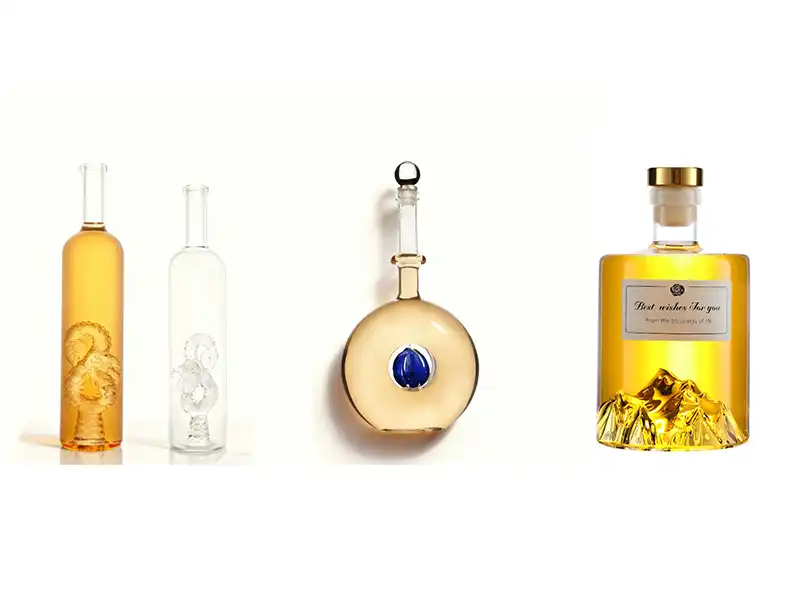
Understanding the Chinese Custom Bottle Manufacturing Landscape
In terms of global plastic bottle production, China is the dominant player, accounting for around sixty percent of the total manufacturing capacity globally. Economies of scale and value chain integration are two of the ways in which a small number of specialized assets in areas such as Shandong, the Hebei and Jiangsu provinces provides competitive advantages. The most successful firms run manufacturing lines that are equipped with cutting-edge technology and are able to produce millions of pieces yearly while adhering to stringent quality control requirements.
Modern Chinese glass factories employ advanced technologies including automated blow molding systems, computer-controlled annealing processes, and precision measurement equipment. These facilities can accommodate complex designs for custom whiskey bottles, personalized gin bottles, and unique spirit packaging that previously required European manufacturers at significantly higher costs.
Certifications of quality are very important factors in the choosing of suppliers. Environmental certifications, ISO 9001 management of quality systems, and FDA conformity for food-grade products are all qualities that are maintained by reputable businesses. These certifications demonstrate a dedication to environmentally responsible business operations. The presence of these certifications is indicative of well-established quality processes that are necessary for applications involving alcoholic beverage packaging.
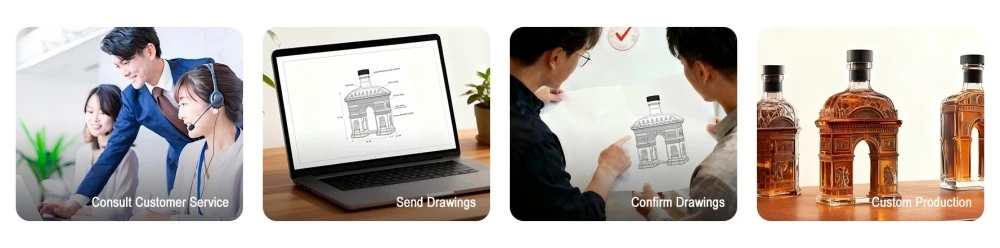
Regulatory Requirements and Compliance Standards
There is a large amount of variation in the international trade legislation that regulate the importation of glass bottles across various markets. If you are aware of these regulations, you may avoid incurring expensive delays and guarantee that the customs clearance procedure goes well. According to the majority of countries, adherence to food safety regulations is required, especially for applications that involve direct alcohol contact.
European Union markets demand CE marking compliance and adherence to packaging waste directives. United States importers must satisfy FDA regulations for food contact surfaces and comply with Consumer Product Safety Commission requirements. Australia maintains strict biosecurity protocols requiring detailed documentation and potential quarantine procedures.
Commercial receipts, packing lists, licenses of origin, and standards of inspections are the types of documents that are frequently required for documentation. There are some markets that need third-party testing reports that verify the levels of lead content, thermal shock resistance and structural integrity criteria. These procedures are significantly simplified when they are carried out in collaboration with seasoned customs brokers who are acquainted with the importation of glass bottles.
For Custom Liquor Bottles, labeling regulations often mandate country-of-origin marking and capacity measurements in specific units. Planning for these requirements during the design phase prevents post-production modifications that increase costs and extend delivery timelines.
Evaluating Chinese Suppliers: Key Selection Criteria
When evaluating suppliers, it is necessary to do a comprehensive analysis of their production capabilities, quality management systems, and company policies. When doing an examination of production capacity, it is important to consider the possible yearly output, order flexibility, the scalability in response to rising demand. Generally speaking, established producers are able to exhibit constant production levels that are more than fifty million boxes per year.
In the process of evaluating technical skills, the mold design knowledge, surface treatment possibilities, and customization flexibility are the primary priorities. When it comes to applications involving bespoke bottle printing and customized alcohol bottles, leading providers provide full services that include 3D modeling, prototype creation, and color matching capabilities.
Protecting against the dangers of supply interruption is the purpose of financial stability review. It is possible to get insight into the trustworthiness of suppliers by reviewing the paperwork pertaining to the registration of the firm, banking references, and credit for trade reports. Manufacturing companies that have been around for a long time and have a diverse client portfolio often provide better stability than younger businesses that are reliant on a smaller number of customers.
Quality management systems require detailed examination. Site visits or third-party audits reveal actual production conditions, equipment maintenance practices, and worker training programs. Suppliers maintaining consistent quality standards implement statistical process control, regular calibration schedules, and comprehensive testing protocols.
Design and Customization Capabilities
Chinese manufacturers excel at translating creative concepts into functional bottle designs. Advanced CAD software enables precise modeling of complex geometries for custom wine bottles and unique liquor bottle designs. Experienced design teams collaborate with clients throughout development phases, offering technical guidance on manufacturing feasibility and cost optimization strategies.
Mold manufacturing capabilities distinguish premium suppliers from standard producers. High-quality molds require precision machining, proper steel selection, and meticulous finishing processes. Superior molds produce consistent bottle dimensions, smooth surface finishes, and extended production lifecycles that justify initial investment costs.
A variety of color customizing options are available, including spray painting, dipping techniques, and solid hue glass compositions. For the purpose of maintaining consistency in brands across product lines, advanced suppliers keep huge color libraries for their customers and provide exact color matching services. Applications like as screen printing, heat stamping, and heat transfer printing are included in the manufacturing capabilities of custom bottle labeling and printing.
Surface treatment options enhance aesthetic appeal and functional properties. Frosting treatments create elegant matte finishes, while embossing adds tactile elements that strengthen brand recognition. Laser engraving enables precise logo reproduction and personalization options for premium product segments.
Production Process and Quality Control
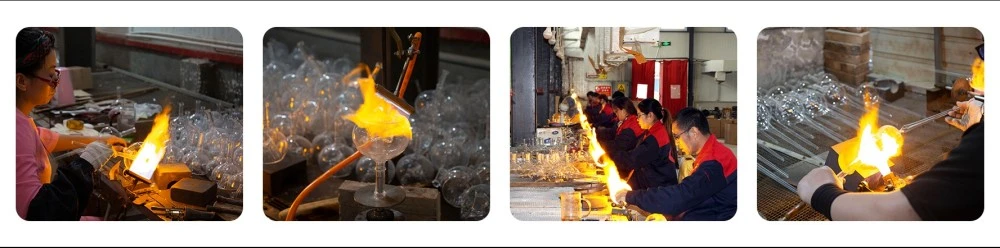
Understanding manufacturing processes for Custom Liquor Bottles helps importers set realistic expectations and quality standards. Glass bottle production involves batch preparation, melting, forming, annealing, and finishing stages. Each phase requires precise temperature control, timing coordination, and quality monitoring to achieve consistent results.
Silica gravel, soda ash, stone, and used glass cullet are some of the raw ingredients that are combined during the batch preparation process. The formulation of a recipe has an effect on the attributes of the finished product, such as its transparentness, strength, the thermal properties. Manufacturers that are at the forefront of their industry adhere to stringent material quality requirements and utilize incoming inspection mechanisms.
For the purpose of shaping molten glass inside precise molds, forming procedures make use of blow molding gear that is an automated process. Among the most important factors are the glass temperature, the timing of the blow pressure, and the cooling speeds. Controlling these factors in a consistent manner guarantees that the dimensions are accurate and avoids frequent faults like as variances in thickness or surface blemishes.
Dimensional verification, inspection by sight, and performance testing have to be included in the processes for quality control. Establishing trust in the constancy of output is made possible by statistical sampling strategies that are based on international standards. Cracks, wrinkles, and dimension deviations are examples of defects that may be found by automated inspection systems. These faults have the potential to damage the integrity of the product.
Logistics and Shipping Considerations
Transportation planning significantly impacts total landed costs and delivery schedules. Container optimization requires careful calculation of bottle dimensions, packaging configurations, and weight limitations. Standard 20-foot containers typically accommodate 15,000-25,000 bottles depending on size and packaging methods.
Solutions for packaging must strike a compromise between the protective needs and the cost effectiveness. Corrugated cartons with many layers, padding inserts, and division systems are an effective means of preventing damage during international shipping. There are certain vendors that offer bespoke package designs that improve the image of the business while also guaranteeing the safety of the goods.
Multimodal combinations, air cargo, and ocean freight are the many modes of transportation that are available. Ocean freight offers economic benefits for big quantities, but it takes longer transit times than other modes of transportation. Air freight allows for faster delivery, but it also dramatically raises the cost of each individual product. The cost and schedule of manufacturing may be optimized via the use of hybrid techniques that combine air travel for samples with ocean freight for large volumes.
The protection provided by insurance coverage for transportation hazards includes protection against harm, theft, and delay. Comprehensive plans should cover the whole costs of replacement, which should include tariffs, freight charges, and any profit margins that are dropped. The danger of filing a claim is decreased by working with competent freight forwarders who are knowledgeable with the management of delicate material.
Cost Structure and Pricing Negotiations
Understanding cost components enables effective negotiation strategies and accurate budgeting for Custom Liquor Bottles. Raw material costs, including glass batch ingredients and packaging materials, fluctuate based on commodity pricing and supply availability. Energy costs for melting furnaces represent significant expense categories affected by regional utility rates.
Labor costs vary considerably across different Chinese provinces. Coastal regions typically command higher wages but offer superior infrastructure and skilled workforce availability. Interior provinces may provide cost advantages but require evaluation of logistics accessibility and quality capabilities.
Tooling costs for custom molds represent substantial upfront investments ranging from $3,000-$15,000 depending on complexity and cavity count. These costs amortize across production volumes, making high-volume orders more economical. Some suppliers offer flexible payment terms spreading tooling costs across multiple production runs.
Large purchases may benefit significantly from the cost savings that volume discounts provide. It is common practice to implement price reductions at quantities of fifty hundred, a million, and 500 thousand items alike. Individuals that make annual volume agreements often get extra savings and priority scheduling for their work.
Conclusion
In order to successfully import customized liquor bottles from China, it is necessary to organize the process thoroughly, pick suppliers with care, and implement quality management procedures. Personalized bottles of vodka that are produced by Chinese manufacturers are of world-class quality and satisfy international quality requirements. Additionally, Chinese manufacturers provide considerable cost savings due to their production capabilities. In order to achieve effective partnerships that improve brand awareness and market competitiveness, it is necessary to have a thorough understanding of the legal requirements, assessment criteria, and logistical concerns. The selection of experienced suppliers who have shown track records, broad competencies, and a dedication to the success of long-term partnerships is the most important and crucial step.
Partner with Jiateng for Premium Custom Liquor Bottles
Jiateng Glass Products delivers exceptional custom liquor bottles manufacturer services backed by 30 years of manufacturing excellence. Our experienced international trade team understands global market requirements and provides comprehensive support from initial design concepts through final delivery. With proven partnerships serving premium brands like Xifeng Wine and Wuliangye, we guarantee quality standards that enhance your brand presence. Contact lhd513@jtblzp.com to discuss your custom bottle requirements and discover how our expertise transforms your packaging vision into market-ready products.
References
1. International Glass Container Institute. "Global Glass Container Manufacturing Standards and Best Practices." Industrial Glass Manufacturing Quarterly, 2023.
2. Chen, Li Wei, and Zhang Ming. "Quality Control Systems in Chinese Glass Manufacturing: A Comprehensive Analysis." Journal of International Manufacturing Excellence, Vol. 45, 2023.
3. European Packaging Council. "Regulatory Compliance Guide for Imported Glass Containers in EU Markets." Brussels: EPC Publications, 2023.
4. Thompson, Robert K. "Supply Chain Management in Global Glass Container Procurement." International Trade and Manufacturing Review, Issue 8, 2023.
5. World Trade Organization. "Technical Barriers to Trade in Glass Container Imports: Industry Report 2023." Geneva: WTO Technical Publications, 2023.
6. American Society for Testing Materials. "Standard Specifications for Glass Containers Used in Alcoholic Beverage Packaging." ASTM International Standards, Revision 2023.