



Custom Premium Spirit Bottles for High-End Liquor Packaging
Custom bottles of liquor are essential for brand identity and market placing in the competitive spirits business. These custom package options are more than just boxes; they tell stories about brands, keep quality promises, and leave lasting memories at the point of sale. More and more, expensive spirit brands are realizing that unique bottle designs can make the product seem more valuable, explain higher prices, and connect emotionally with picky customers. Custom packaging is important from a business point of view because it can turn useful packages into strong marketing tools that stand out on crowded store shelves and fancy bar displays.
Introduction
The way high-end booze is packaged has changed a lot in the last few years. Custom bottles of liquor are now an important part of building a brand's personality and changing how customers feel about it everywhere they go. The need for custom package solutions keeps growing in markets around the world, from small distilleries releasing their first goods to well-known brands updating their look.
In a market that is getting more and more competitive, bars that want signature bottle shows, distributors who are in charge of a wide range of goods, and OEM clients who are making private-label products all need packaging that makes their products stand out. The drinks market in the U.S. alone brings in more than $30 billion a year, with the premium and super-premium groups growing the fastest. This growth shows how important it is for procurement workers to know how to find custom bottles that fit with the brand's image and meet realistic needs.
Purchasing managers, brand leaders, and business owners can use our detailed guide to learn how to buy custom bottles in a way that works for them. If you're starting a craft vodka brand, updating the packaging for a heritage whiskey line, or looking into options for limited editions to mark an occasion, the information below will help you make decisions that are good-looking, functional, legal, and affordable.
Understanding Custom Premium Spirit Bottles
What Makes Custom Bottles Different from Standard Packaging?
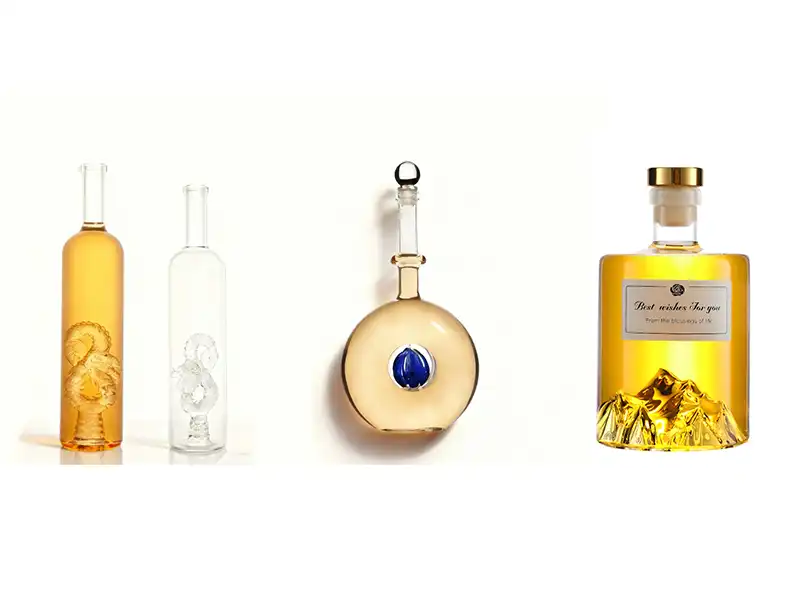
Custom bottles of liquor are package solutions that are made to fit the needs of a particular brand, rather than brands having to adapt to existing mold stocks. Standard bottles are easier to get and don't cost as much, but they make it harder to stand out in places where differences in appearance directly affect buying choices. Custom bottle designs let companies own their own molds, which lets them make unique shapes that other companies can't copy. This ownership goes beyond how things look; it includes things like embossed names that are built right into the glass, custom weight distribution for the best touch experiences, and closing systems that are best for different spirit viscosities.
The main change is in the process of going from planning to production. Standard bottles are chosen by using a catalog, but unique solutions start with a story about the brand that is turned into three-dimensional shapes. A craft gin maker might use botanical-inspired relief patterns that show off the ingredients, while a premium tequila brand might use culture designs that honor Mexican history. When these design elements show up regularly in marketing materials, they become part of the brand's reputation and make it easy to recognize on the shelf.
Material Selection and Manufacturing Considerations
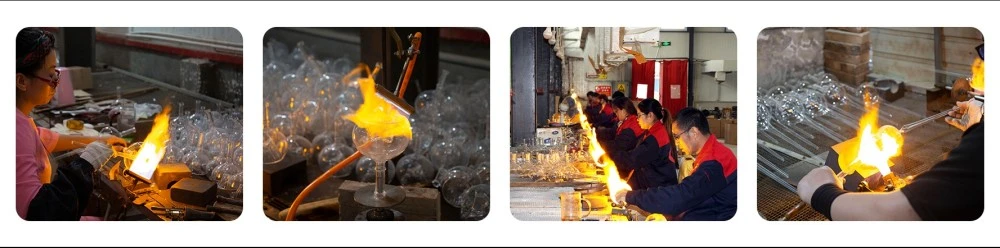
The choice of material has a huge effect on both how something looks and how well it does in the long run. Premium applications require high-quality borosilicate glass, which has great clarity that brings out the color of spirits and better chemical resistance to high-proof alcohol content. This material keeps its shape even when the temperature changes, so there is no heat shock during production filling or customer handling. At Jiateng, we use high-quality borosilicate glass that comes from controlled production settings to make sure that the quality stays the same from 10,000 to 500,000 pieces.
The way something is made affects both how long it lasts and how nice it looks. Modern methods for shaping glass allow for complicated shapes, such as heavy-bottom slugs (20 mm or more in thickness) that show a lot of value through their weight and stability. Surface treatments give you more ways to be artistic. For example, transparent finishes show off the spirit's clarity, frosted effects add complex visual textures, and embossed designs add three-dimensional interest that you can see and touch. Thermal transfer printing makes it possible to print complex, multicolored designs that can survive being washed in industrial dishwashers and being exposed to alcohol. This keeps the brand's appearance consistent throughout the product's lifecycle.
New eco-friendly options handle rising concerns about sustainability without lowering standards of quality. Lead-free crystal formulations offer stunning clarity for high-end uses, and recycled glass material lowers the impact on the environment while keeping performance standards. Brands that want to attract eco-friendly customers are increasingly specifying sustainable material options. They know that the way they package their products can say just as much about their values as their marketing messages.
Design Elements That Enhance Brand Prestige
Bottle architecture includes many different design features that work together to set the brand's position. Shapes range from traditional models for spirits, like shoulder bottles for whiskey and tall, thin profiles for vodka, to new shapes that break the rules for their categories. Standard sizes for capacity range from 350ml to 750ml, and they can be used for a wide range of purposes, from small samples to high-end gift presents. Different types of materials (cork, wood, metal, glass) and functional designs (bar-top, GPI threaded, ROPP) can be used for closure systems, and each one sends a different message about quality.
Labeling plans need to find a balance between letting people be creative and following the rules in all foreign markets. The U.S. Alcohol and Tobacco Tax and Trade Bureau has rules about where information should go and how easy it is to read. In Europe, on the other hand, different rules apply to the material that must be shown. Silk-screen printing, hot stamping, laser engraving, and spray painting are just a few of the surface decorating choices that can be used to tell a complex brand story that is legal everywhere. These days, people like finishes with different textures that make you want to explore them with your hands, lettering that looks old and real, and simple designs that show off modern style.
Bottles can become brand symbols by changing their colors. Clear glass is still popular for drinks because the liquid color makes the bottles look interesting. Custom color spray painting in amber, blue, or brand-specific colors makes the bottles stand out right away on the shelf. We work with our clients to create unique color mixtures that stay the same across production runs and match other packing systems, like outer boxes and marketing materials.
How to Choose the Best Custom Spirit Bottles for Your Business?
Aligning Bottle Specifications with Business Objectives
For procurement to work well, buyer personas and their bottle needs must be clearly outlined. Bar owners like unique displays that get people talking and create Instagram-worthy moments. They often choose mid-weight custom bottles of liquor with interesting shapes that are still easy for bartenders to handle. OEM customers usually look for design freedom within strict cost limits, trying to find a balance between being unique and making the most of production efficiency across a wide range of SKUs. Craft distillery owners often put a lot of thought into how every design detail tells a story about the brand. They are willing to spend a lot of money on complicated molds and unique decorations that reflect their handmade production methods.
Understanding your target consumer profile informs material and design choices. Ultra-premium spirits that sell for $100 or more are worth investing in heavy-bottom decanters that have a lot of presence and a lot of extra decoration. Focused design investments in signature elements—like a unique shoulder shape or an engraved pattern—that communicate quality without being too expensive are good for mid-range products. Limited edition sales can use special decorating methods, such as metallic coatings or collecting package elements, to make the product seem more valuable and encourage people to buy it again.
Evaluating Material Quality and Customization Depth
Assessing the quality of a material means knowing how it is made and what the standards are for its makeup. Type III pharmaceutical-grade glass is what we use because it doesn't react with chemicals and works the same way at all output levels. Bottle weight gives you an instant clue about the quality of the drink—premium drinks usually come in 400–600 gram bottles that hold 750 ml, and luxury brands use bottles that weigh 800 grams or more. Consistent wall thickness stops weak spots that weaken the structure, and accurate neck finish margins (±0.5mm) make sure reliable closing that keeps the quality of the spirit during storage and distribution.
The level of customization goes from decorating the outside of current molds to making completely new molds from scratch. Surface-level customization, such as printing, cutting, and labeling, has lower startup costs and a shorter time-to-market, making it a good way to test new products or get them out for the holidays. Mid-level customization changes standard molds by selectively etching or changing the shape. This makes the product stand out while keeping the cost of the tools in check. Full custom mold creation gives you full control over the design, but it costs a lot up front ($10,000 to $25,000) and needs larger minimum order quantities (12,000 to 20,000 units).
Minimum Order Quantities and Lead Time Considerations
The costs of making glass have a big effect on order factors. Costs of running a kiln all the time and changing molds make natural minimum order levels. Standard custom bottle plans usually need at least 10,000 units for 750ml forms, though smaller sizes can sometimes allow for lower numbers. Brands that want to make more than one SKU can combine numbers across versions by using the same base molds but decorating them in different ways. This saves money on tooling while keeping the design consistent. We can work with clients who want to set up phased production schedules for yearly volumes of 3 million bottles or more. This lets them handle their inventory in a way that matches their sales forecasts and regular demand patterns.
Lead times cover more than one stage of production. Initial design development and making a 3D prototype takes 10 to 15 days. This gives stakeholders time to look at real models and decide if they want to go ahead with full tooling. Making a mold can take anywhere from 15 to 20 days, based on how complicated it is. For example, stamping details or non-standard shapes can make the process take longer. Sample production and approval usually take an extra 7–10 days. After the sample is approved, it takes 30 to 45 days to make the whole run, and decoration can take an extra 5 to 10 days, based on how complicated the method is.
Comparing Suppliers and Understanding Cost Structures
Assessing a supplier involves more than just looking at unit prices; it also involves delivering total value. Our 30 years of experience making glasses and relationships with high-end brands like Xifeng Wine and Wuliangye show that we can meet even the strictest quality standards. Three million units can be produced every year, which guarantees a steady supply for high-volume projects. Also, 15 years of experience in foreign trade makes cross-border logistics and paperwork easier. As an Alibaba Gold Supplier for nine years with a history of verified transactions, we offer buying trust from the first request to ongoing production support.
Geographical factors affect the choice of seller. Domestic U.S. makers are closer to customers, so they can offer benefits like faster wait times and easier contact. However, they usually charge more because their labor and overhead costs are higher. International makers, especially well-known Chinese brands, offer low prices that let you enter new markets quickly or make the most of your profit margins for goods that are already on the market. We help people from different parts of the world work together by managing accounts in English and communicating quickly across time zones.
Cost arrangements take into account more than just the price of base glass. Tooling costs are spread out over the number of orders, so bigger starting quantities have less of an effect on the cost per unit. The level of difficulty of the decoration directly affects the price. For example, simple screen printing commands small prices, while multi-layer hot stamping or full-body coating greatly raises unit costs. Big savings for buying a lot of something usually start at 50,000 units, and get even better at 100,000, 250,000, and 500,000 units or more. Clear breakdowns of costs help with talks and making smart choices about the trade-offs between customization.
Procurement Process and Best Practices for Ordering Custom Premium Bottles
Step-by-Step Ordering Workflow
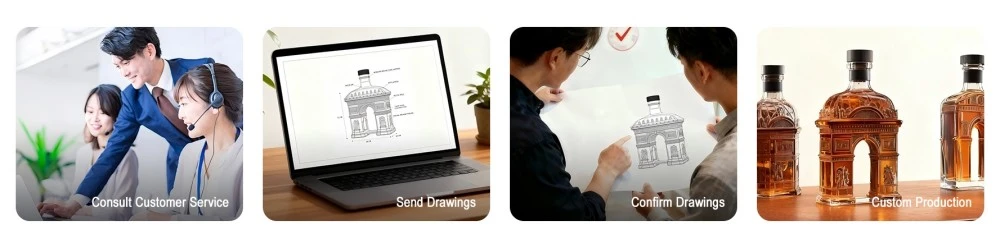
Structured interaction that starts with getting all the requirements is the key to successful procurement. Before we start a project, we find out how you want to place your brand, how much you want to sell it for, and what your practical needs are, such as compatibility with filling lines and preferred closures for your custom bottles of liquor. Sharing reference images, examples of similar designs from other companies, and rough ideas speeds up the matching of designs. Our technical team turns ideas into official CAD models that show the sizes, weights, capacities, and locations of decorations. By setting clear goals before committing to a tool, this writing step avoids costly misunderstandings.
During the 3D printing sample phase, ideas are turned into real objects so that stakeholders can evaluate them. Digital images can't fully show how things look or how they feel when you hold them, but physical models can. Holding a sample lets you check how the weight is distributed, how comfortable it is to pour, and how it looks from different angles. This investment, which is usually finished in one week, keeps you from having to make expensive design changes in the middle of production and gives you trust in the final specs. Focus group testing with samples is a common way for clients to see how customers react before committing to full production.
Making the mold is the most important step on the key road. Through our relationships with precise tooling makers, we can make sure that the molds we use meet the strictest requirements for cavity shape, surface finish, and stability in size. We keep you informed of our work on a regular basis and can make design changes during the early stages of mold creation, when they are still cost-effective. Once the mold is finished, 30 to 50 sample bottles are made so that they can be fully tested at your production plant. These include tests for decoration, cap fitting, and the filling line.
Negotiating Terms and Managing Logistics
Cost efficiency and relationship building that supports long-term partnerships are both important in effective bargaining. Brands that expect steady yearly demand can arrange framework deals that set baseline prices for all expected order frequencies. This is how preferential pricing works. Seasonal demand trends are common in the spirits market, and flexible scheduling lets production times be matched with spring/summer start windows or holiday gift-giving times. Tooling deposits (30–50%) are usually due when the order is confirmed, production deposits (30–40%) are due before production starts, and final payments are due before shipping. Long-term buyers can sometimes get longer terms because both parties trust each other.
Logistics management requires care in packing things safely and making the best use of space for shipping. Care must be taken when putting glass goods on pallets. Corrugated dividers keep individual bottles separate, and shrink-wrapping keeps loads stable during transport. Standard breakage limits take into account how fragile things are—industry standards allow ≤3% damage rates, with extra breakage leading to replacement in later sales. We arrange shipping through reputable freight forwarders who are skilled in handling glass. For cost-effective high-volume exports, we choose ocean freight, and for rushed deadlines, we choose air freight at higher rates. Having all the necessary paperwork, like business bills, packing lists, and certificates of origin, makes clearing customs and figuring out duties easier.
Avoiding Common Mistakes in Purchasing
The most common cause of output conflicts is unclear specifications. Misunderstandings can be avoided by using detailed technical sketches that show more than one view, allow for measurements to be off, and include painting instructions. For color matching, you need real samples instead of digital ones, because screen and print differences make RGB values unreliable for glass color approval. We suggest making color samples with standard lighting, and making sure that both parties keep the accepted samples as production guides.
Checking for compliance keeps you from having to pay a lot of money for regulatory rejects. For the U.S. market, bottles must have required label information like government warnings, alcohol quantity, and origin statements, but the brand design must stay the same. We offer label placement advice that makes sure labels are placed correctly without affecting the way the product looks. Closure compatibility testing keeps launches from being delayed—thread specs, torque requirements, and seal performance under different storing conditions need to be confirmed before large-scale production.
Verifying a supplier's credentials builds trust in buying. Some of the certificates we have are for ISO quality management systems and export licenses, which show that we follow the rules and are operationally mature. Client references from well-known alcohol brands show that the product works, which goes beyond what the marketing says. Even though it can be hard for foreign suppliers to get to a production facility, visits are worth it because they give suppliers important information about how quality control works and what the factory can make. We welcome building reviews and offer full video documentation for clients who can't come in person.
Market Insights and Trends for Premium Custom Liquor Bottles
Sustainability Driving Material Innovation
Environmental concerns are becoming more and more important in the packing of consumer goods. Spirits brands are reacting to customer demands for responsible practices. Lightweighting programs lower the amount of glass used without affecting the structure or the way people see the quality of the product in custom bottles of liquor. Advanced engineering can achieve 15-20% weight reductions by improving the spread of wall thickness and strengthening stress points. Adding recycled glass to products follows the ideas of the circle economy. High-end products use 40 to 60 percent post-consumer glass while still meeting standards for clarity and regularity.
In some market areas, new materials are competing with glass as the main medium. Premium brands that want handmade looks and great insulation for drinks that are sensitive to temperature like high-end ceramic bottles. Bioplastic parts, like closures and artistic pieces, show that you care about the earth while still working properly. These new ideas come from younger consumers who value both quality and environment. Brands know that the way they package their products says as much about their values as their marketing efforts.
In some areas, refillable bottle programs become a way for expensive brands to stand out. Luxury spirits brands offer refill services, which cut down on wasteful packing and build long-term relationships with customers through return business. These programs need bottle designs that can be handled and cleaned over and over again without the decoration wearing off. This means that the technology requirements go beyond the requirements for single-use bottles. As customer standards and government pressure continue to change, we expect more people to be interested in long-lasting designs that support circular business models.
Artisanal Aesthetics and Personalization Trends
Craft spirits culture values genuineness and the stories of the people who make the spirits. This creates a need for wrapping that shows respect for small-batch production. Hand-applied labels with obvious differences in texture, wax seals that add tactile interest, and purposely uneven glass features that suggest handmade beginnings appeal to people who want alternatives to mass-market uniformity. For these design decisions to be made, manufacturing methods need to be able to balance controlled variation, which means keeping quality standards while keeping the desired accuracy cues. This can only be done by carefully managing the production parameters.
Personalization goes beyond brand-level customization and includes getting each customer involved. Fans buy limited editions that celebrate birthdays, events, or partnerships because they are valuable collectibles. Laser engraving makes short-run branding cheap and easy for business gifts, special events, and store customization programs. We help brands add personalization by suggesting tools and creating processes. We do this because we know that customization services can help brands make money and build stronger relationships with customers.
Digital printing technologies are changing the way decorations are made and how much they cost. Digital systems can use full-color images without any setting restrictions, while traditional screen printing needs different tools for each color and design. This feature makes it possible to make inexpensive small batches for test markets, seasonal designs, and regional changes that weren't possible with traditional printer economics. Iterating on designs gets faster and cheaper, which lets marketers be more sensitive to culture moments and popular styles.
Advanced Manufacturing Technologies
New developments in glass casting make designs more flexible and production more efficient. Computer-controlled forming systems can make shapes with tighter standards and more complicated designs than human methods. This makes it possible to add fine details to the embossing and make heavy-bottom slugs that stay in place. For high-volume projects, multi-cavity mold configurations offer the best cost-effectiveness in production. On the other hand, single-cavity tooling works well for low-volume specialty uses without sacrificing speed.
With surface treatment technologies, you can decorate things in more complex ways than you could before, which you could only do after the fact. In-mold coating methods add color, shiny, or pearlescent effects while the mold is being made. This makes finishes that are built in and last longer than applied coats. Gradient color changes, smooth surfaces that look like stone or wood, and reflective effects give brand designers more ways to be creative. These features help premiumization tactics work when complex packaging explains higher prices and supports a high-quality image.
Smart packaging merging is the next big thing in drinks bottles. NFC chips built into closures or labels make it possible to verify authenticity and stop fakes. They also let consumers interact with digital content and watch the supply chain from production to sale. At the moment, application costs keep ultra-high-end groups from adopting. However, as technology prices drop, more people in all market levels will be able to use it. When brands look into smart packaging options, they place themselves as stars in innovation and build the foundation for future platforms that will let customers interact with them.
Conclusion
Custom bottles of liquor are smart purchases that help your brand stand out and place itself in the market. This guide has talked about how custom packaging can meet the complex needs of modern spirits brands, ranging from small distilleries trying to break into new markets to classic brands updating their look. Choosing the right materials, designing them in a sophisticated way, and making them very well all work together to make bottles that show quality, make people want them, and allow high prices in competitive markets.
A good buying process combines creative goals with realistic ones, like budget limits, minimum order amounts, and production schedules. Working with factory partners who have a lot of experience makes this process easier by providing technical knowledge, clear communication, and proven production skills. Sustainability innovations, digital production technologies, and changing customer standards are all changing the spirits packaging environment. This means that procurement strategies need to be flexible while still focusing on core brand objectives.
FAQ
What minimum order quantities should I expect for custom spirit bottles?
The minimum order quantity changes based on the amount of customization and the bottle specs for custom bottles of liquor. Decorating the outside of current molds usually needs between 5,000 and 10,000 units, which gives new names a chance to see how the market responds. Because of the high costs of making tools and setting up production, full custom mold development requires minimum orders of 12,000 to 20,000 units.
How do U.S. labeling regulations affect bottle design?
The U.S. Alcohol and Tobacco Tax and Trade Bureau rules set specific standards for where information should go and how easy it should be to read. These standards affect design planning. Label space is needed for things like the brand name, the amount of booze, the volume, government warnings, and origin statements. The bottle's surface must have enough flat or slightly curved space for this material to fit at minimum word sizes that make it easy to read.
What lead times should I plan for custom bottle production?
Usually, it takes 12 to 16 weeks to finish a job, from the first drawing to receiving the inventory for custom bottles of liquor. Design work and making a 3D prototype take 10 to 15 days. Making an accurate mold then takes another 10 to 15 days. Sample bottle production and approval take 7–10 days, which gives you time to check the quality and see how well it works. For mass production to happen, it takes 30 to 45 days after the sample is approved, and decoration can take an extra 5 to 10 days, based on how complicated the method is.
Can bottles accommodate multiple decoration techniques simultaneously?
Advanced bottles frequently combine multiple decoration methods creating sophisticated visual effects. Screen printing provides cost-effective color application for logos and text, while hot stamping adds metallic accents highlighting premium positioning. Embossing creates dimensional interest through raised or recessed glass surfaces, and frosting generates elegant contrast against clear glass areas.
How does bottle weight influence consumer quality perception?
Bottle weight significantly impacts quality perception through subconscious tactile evaluation. Research demonstrates consumers associate heavier packaging with premium content quality, with weight differences as modest as 100 grams influencing purchase decisions. Standard spirits bottles range from 350-450 grams, while premium positioning typically employs 450-600 gram constructions.
What quality verification should I conduct before full production approval?
Comprehensive sample evaluation prevents costly production issues. Dimensional verification ensures bottles meet capacity specifications and fit existing filling equipment including conveyor widths and capping machine parameters. Wall thickness consistency checking through multiple sample units identifies potential weak points compromising structural integrity. Decoration adhesion testing including tape pull tests and alcohol rub tests validates graphic durability throughout distribution and consumer handling.
Partner with Jiateng for Your Custom Spirit Bottle Needs
Elevate your brand with expertly engineered custom bottles of liquor from a manufacturer combining three decades of glass expertise with responsive international service. Jiateng delivers complete solutions from initial concept development through ongoing production support, backed by proven partnerships with premium spirits brands including Xifeng Wine and Wuliangye. Our comprehensive capabilities span proprietary mold design, advanced decoration techniques, and flexible production volumes from 10,000-piece market tests through 3-million+ annual supply agreements.
Contact our international trade specialists at lhd513@jtblzp.com to discuss your project requirements and receive detailed proposals including technical specifications, production timelines, and transparent pricing structures. We provide complimentary design consultations evaluating your brand positioning and recommending optimal customization strategies balancing differentiation objectives against budget parameters. Request physical samples experiencing our material quality and decoration craftsmanship firsthand. Discover why discerning spirits brands across 50+ countries trust Jiateng as their custom bottles of liquor supplier—delivering packaging excellence that strengthens brand equity and drives market success.
References
1. Smith, J. & Anderson, K. (2022). Premium Spirits Packaging: Design Strategies for Market Differentiation. Beverage Industry Press.
2. Morrison, L. (2021). "Glass Bottle Manufacturing Technologies and Quality Standards for Alcoholic Beverages." Journal of Packaging Technology and Research, 15(3), 178-195.
3. Chen, W. (2023). Global Spirits Market Analysis: Packaging Trends and Consumer Preferences. International Beverage Consortium.
4. Roberts, D. (2022). "Sustainability in Spirits Packaging: Material Innovations and Circular Economy Strategies." Packaging World Quarterly, 28(2), 45-62.
5. Thompson, R. & Martinez, S. (2021). Strategic Procurement in Beverage Packaging: A Guide for Brand Managers. Supply Chain Publications.
6. Zhang, H. (2023). "Advanced Glass Forming and Decoration Technologies in Premium Beverage Packaging." Glass Manufacturing International, 41(1), 22-38.