



Glass Whiskey Decanter vs Bottle: What’s Better?
A basic question that brands often struggle with when deciding what to buy for whiskey packaging or display is: should we buy a Glass Whiskey Decanter or stick with bottles? The answer rests on the goals of your business and the people you want to sell to. Glass Whiskey Decanters are great for high-end gifts, high-end social settings, and brand differentiation strategies where how something looks directly affects people's decisions to buy. They take drinks and turn them into striking pieces that stand out in stores and boardrooms. Traditional bottles, on the other hand, offer consistent safety, easy shipping, and well-known brand awareness. In the alcohol business, they are used for different things. Knowing the differences between them helps procurement managers make sure that the packing they choose fits with their marketing goals and what customers expect.
Introduction
When buying alcoholic drinks for business, the discussion between standard whiskey bottles and a glass whiskey decanter is about more than just looks. How you package your products has a direct effect on how well they last, how people see your business, how your customers feel, and eventually, where you stand in the market. It's up to the procurement teams for mid-range to high-end whiskey brands, original equipment manufacturers, and international trading companies to figure out how each option fits into different business situations, like making unique corporate gifts, improving on-site hospitality, or making a name for themselves in a crowded retail market.
When you're in charge of big sales that range from 10,000 to 500,000 pieces a year, this choice becomes even more important. The quality of the materials, the ability to customize them, the mechanics of shipping, and the possibility of a long-term relationship all play a role in this strategic choice. As the markets for alcoholic drinks in the US, Europe, and emerging regions continue to look for new ways to package their products, it's important to know the functional and commercial differences between decanters and bottles. This will help you make smart investments that build brand equity and keep operations running smoothly.
Understanding Glass Whiskey Decanters and Whiskey Bottles
Defining Glass Whiskey Decanters
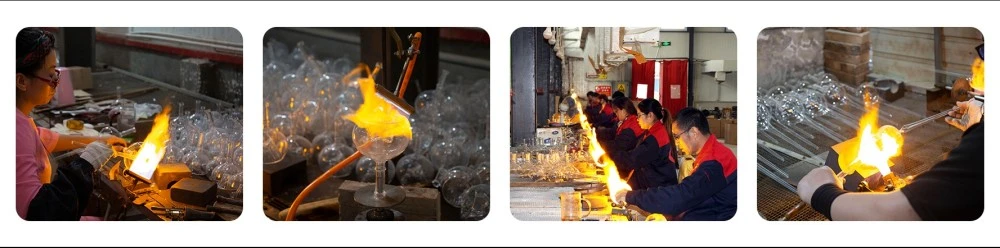
A Glass Whiskey Decanter is a second dish meant to hold and show off aged spirits. Unlike the original whiskey bottles, decanters focus on how they look and how they feel to use. Most high-end decanters are made of lead-free borosilicate glass or crystal, which is very clear and lets the rich brown colors of whiskey shine through. The choice of material is very important. Borosilicate glass can handle changes in temperature without clouding and doesn't etch when exposed to commercial-grade cleaners over and over again, which makes it perfect for high-traffic restaurant settings.
Decanters are different from regular packaging because their bases are usually bigger and their shapes are more artistic. The glass bottle with a glass lid creates an airtight seal that makes it easy to reach and store for a short time. With capacities running from 250ml to 750ml, there is a size for any serving situation, from small samples to business bar services.
Standard Whiskey Bottles Explained
Throughout the supply chain, traditional whiskey bottles put security, standardization, and brand expression first. These bottles are made using standard glass-forming techniques, and their neck sizes, wall thicknesses, and closing systems are all designed to allow for long-distance shipping, stacking in a warehouse, and longer shelf life. The main goal is still to keep the consistency of the liquid from the brewery to the customer while giving plenty of space for labels, embossing, and thermal transfer printing that tells company stories.
Bottles are great for keeping liquids in the same state for months or years. Their sealed environment keeps rust and evaporation to a minimum, which is important for high-end spirits whose flavors need to stay fixed from production to consumption. When you make more than 100,000 units, you can save money by using mass production methods. This makes bottles the best choice for wide delivery networks.
Historical Evolution in Commercial Contexts
In the past, decanters were used as status symbols in the homes of wealthy people. Later, they were used in business for entertainment and as gifts for companies. By the middle of the 20th century, high-end hotels and private clubs were using handmade decanters as brand champions. These created visual experiences that made the higher prices worth it. Because of this change, decanters are now seen as unique marketing tools rather than just useful items.
Bottles, on the other hand, were created along with industrial bottling processes to make them more scalable and compliant with regulations. Modern strategies for buying things know that both bottle and decanter forms are useful in different situations. Bottles are used for main packaging and delivery, while decanters are used for involvement and brand elevation after the sale in places like executive gifts, VIP areas, and high-end store displays.
Key Differences Between Glass Whiskey Decanters and Bottles
Functionality and Preservation Performance
The main difference between the Glass Whiskey Decanter and bottles is how long they can be stored and how well they can keep the surroundings clean. Decanters with glass stoppers make good seals that last for weeks or months, making them good for bars, business entertainment areas, and home collections where people drink a lot. The bigger hole makes it easier to pour and clean, but it lets a little more air in than bottles with cork or screw cap closures that are designed to last for years.
Bottles made for whiskey, brandy, vodka, and Baijiu have closing methods that keep the seals almost perfect for a long time. This is very important when drinks are stored or sold in stores for years without being opened. The narrow neck limits the amount of liquid surface area that comes into contact with air. This lowers oxidation, which can flatten complex taste profiles. When purchasing for delivery networks, this ability to preserve is most important, while when purchasing for immediate drinking settings, the ease of access that decanters offer may be more important.
Borosilicate glass, which is used in high-quality decanters, is resistant to thermal shock, which keeps it from breaking when different-temperature liquids are added. This sturdiness is useful in places like bars and restaurants where the glasses are washed and handled a lot. Soda-lime glass is usually used for bottles. It's good for single-use packaging but not as good at withstanding repeated heat cycles.
Aesthetic Impact and Brand Differentiation
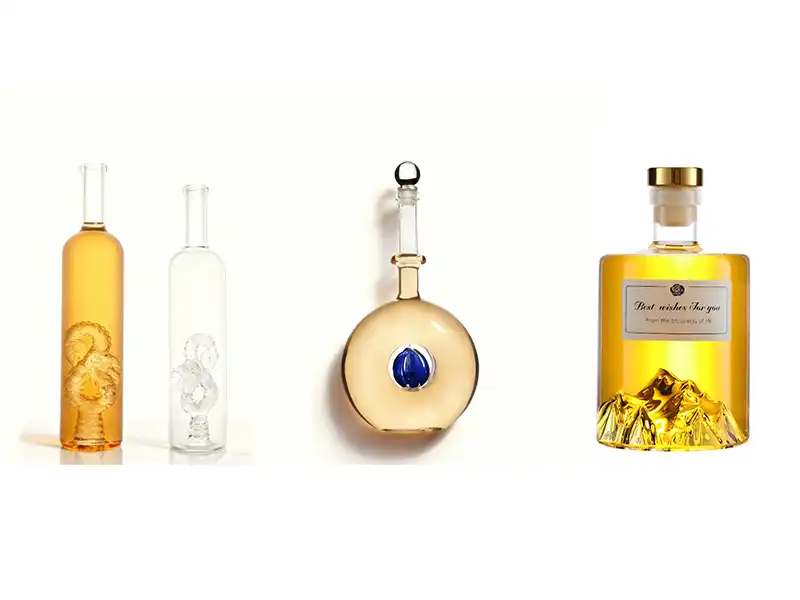
The most striking difference between decanters and bottles is how they look. Custom designs for Glass Whiskey Decanter turn drinks into sculptures that deserve to be placed at the top of the list. Clear bottles, frosted finishes, raised designs, and colored spray painting all make them stand out on the shelf, but decanters go even further with artistic shapes that become conversation starters. Landscapes, architectural sites, or brand icons can be inserted in the glass of a decanter, making every pour a chance to tell a story.
Both types can have names and event themes added to them using methods like hot pressing, laser cutting, silk-screen printing, and electroplating. The difference is in the potential in three dimensions and the size of the surface. Decanters usually have wider bases and curved curves that show off engraving work. Bottles, on the other hand, have flatter label spots that are best for legal information and marketing copy. High borosilicate glass is more clear than regular bottle glass, so the color of the whiskey stands out more brightly. This makes the whiskey seem higher quality.
Custom bottle designs give brands that want to sell high-end gifts for business or guests a big edge. Limited editions that come in unique decanters become collectibles, which drives up the value of the secondary market. Bottles help customers remember a brand because they have the same shape across all retail outlets. Decanters, on the other hand, make unique touchpoints that set special releases or premium levels of a product's collection apart.
Maintenance and Operational Practicality
In business settings, the total cost of ownership is affected by how much maintenance is needed. Decanters need to be cleaned regularly to keep dust from building up and clouding the glass. This is important to keep in mind in bars and tasting rooms where the glasses are always being turned. With a bigger mouth, it's easier to wash your hands, but it's more likely to break when you handle it. High-quality borosilicate construction makes this less of a problem by making the glass more resistant to pressure than regular glass.
As single-use main packaging, bottles don't need much care. Once a product is opened by a customer, the upkeep duty shifts from the brand to the customer. This ease of use makes things easier for brands that want to sell a lot of items. Decanters add ongoing costs to operations, but they give your brand continuous exposure in places where they can be seen for weeks or months.
Durability tests show that well-made decanters can handle hundreds of pour cycles as long as they are treated correctly. The glass bottle and glass lid work together so that broken parts can be replaced without having to throw away whole pieces. This modularity makes the product last longer, which is good for buying strategies that focus on sustainability and places that keep a lot of decanters on hand. Bottles aren't as flexible, but they don't need to be managed as parts do.
Procurement Considerations for B2B Clients
Aligning Product Choice with Business Applications
Decisions about what to buy must be directly linked to how it will be used. A Glass Whiskey Decanter that shows respect and care are the best gifts for corporate giving programs. A custom-engraved decanter with a business logo or special text makes an impact on clients, partners, and workers that lasts. People think that decanters are worth more than they actually cost, which makes them good investments for relationship-building activities where presentation quality shows brand standards.
Hotels, restaurants, and entertainment places with on-site bars use decanters to make the drinks look better and explain the higher prices. Putting house wines in unique decanters makes the service process more interesting and leads to higher-value sales. Bottles stay in the background to keep track of supplies, while decanters represent the company in the spotlight.
When you work with an OEM or make your own products, you have to carefully choose the format based on the selling outlets you want to reach. Specialty stores and gift shops like decanters with unique patterns that set their products apart. On the other hand, supermarkets and convenience stores want bottles that are easy to stock and sell. Trading companies that serve a wide range of markets often keep two sets of inventory to meet the needs of these different markets.
Cost Analysis and Budget Optimization
At appropriate order numbers, the unit economics of decanters and bottles are very different. Premium glass decanters made using semi-automated processes and hand-finishing details usually cost $3 to $8 per unit at minimum orders of 10,000 pieces. Prices drop to $2 to $5 per unit for orders over 100,000 pieces. Custom mold creation costs between $2,000 and $8,000 more up front, but these costs are spread out over many big runs.
Standard bottles are made completely automatically, and the cost per unit ranges from $0.50 to $2.50, based on the size, weight, and complexity of the design. Established bottle designs don't require custom tools, which lowers the original spending requirements. The trade-off is the ability to set one brand apart from others. Bottles look similar across brands without a lot of customization work, but decanters stand out on their own.
Total funds for purchases must include costs for decorations that make both versions better. Labeling, frosting, and thermal transfer printing cost an extra $0.20 to $0.80 per unit. Premium methods like electroplating or multicolor painting make things more expensive by $1 to $2, but they make them look more expensive, which supports higher selling prices. Investing in decoration has different returns: bottles have ongoing costs per unit for each production run, while carving or stamping on decanters that is built into the molds lasts forever, lowering long-term costs.
Supplier Evaluation and Partnership Quality
When looking for manufacturing partners for either format, you need to carefully consider their production skills, quality control systems, and ability to make changes to the product. Established providers with more than 15 years of experience making glass products show that they know how to handle temperature during shaping, how to finish the glass, and how to make sure that the output is always the same. Hejian Jiateng Glass Products Co., Ltd. is a good example of this standard because, since 2008, they have been delivering about 3 million bottles reliably to well-known names as part of partnerships.
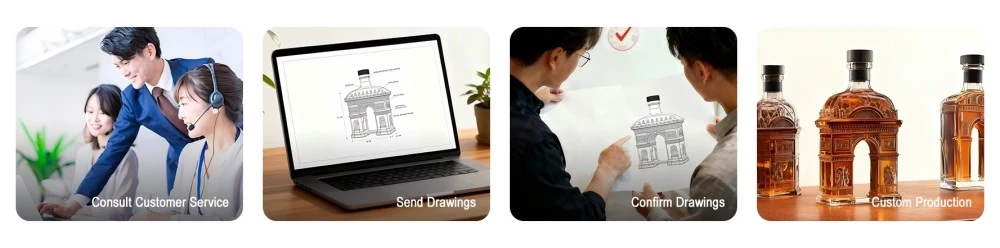
Managers in charge of buying things should make sure that suppliers offer full services, from the first planning meeting to the final delivery. Having the in-house ability to make custom models, 3D-printed physical samples, custom molds, and handle painting processes speeds up project timelines and keeps quality control high. When compared to putting together services from multiple vendors, suppliers handling full workflows make coordination easier.
Different providers have very different minimum order amounts. For custom bottle molds, factories that focus on mass production often have minimums of 50,000 units or more. Specialized decanter makers, on the other hand, may be able to handle initial orders of 10,000 pieces and allow for test marketing before committing to larger numbers. Lead times range from 45 to 90 days from acceptance of the mold to the first shipment of the product. Decoration can add another two to three weeks. Suppliers that store accepted molds allow for faster reorders, which is very important for names whose demand changes often.
Performance and Value Analysis: Glass Whiskey Decanter or Bottle?
Impact on Whiskey Quality and Sensory Experience
How whiskey is presented by the shape of the Glass Whiskey Decanter affects how people think about its quality and taste. Wider decanter bodies expose more of the liquid's surface to air, which should let volatile chemicals interact with oxygen. Long-term air contact is good for some wines, but short-term air contact doesn't change the flavors of drinks with 40% or more alcohol content. The main physical effect is the way the wine looks—looking at the rich color and brightness through high-quality glass makes you look forward to enjoying it before you even take a sip.
Stopper materials help preserve things for a short time in subtle ways. If you use glass-on-glass stoppers, you can be sure that the seals will last for weeks, making them perfect for busy bars and business events. The look of wooden stoppers is warmer, but they only let a little more air flow through. Crystal stoppers are heavy and feel luxurious, which supports their expensive standing. None of them can compare to the hermetic seals of bottle corks or plastic caps made to last for years, so decanters are better for showing off after the purchase than storing for a long time.
Bottles keep their factory seals, which keep the flavors the way they were meant to be throughout distribution cycles and the time they're on store shelves. Distillers carefully choose the right closures for each spirit. For example, corks look nice and let air flow, while screw caps offer complete safety. This level of preservation reliability makes sure that goods taste the way they're supposed to when they're first opened, which is important for keeping brand consistency across global markets.
Enhancing Client Experience and Brand Prestige
Premium display through decanters makes unboxing and using products more remembered, which strengthens emotional ties to brands. Custom decanters are used as theater in high-end restaurants and bars. Pouring from a beautiful vessel becomes a part of the service routine that guests remember and talk about with their friends. This kind of experience marketing creates natural brand support that is worth many times the cost of the product itself.
When given as a corporate gift, decanters clearly perform better than other containers. Recipients keep unique decanters in their homes and offices for a long time after drinking the contents, which keeps the brand visible. When designs on high-end or limited edition bottles are artistic or historically significant, they become collectible in the same way. However, decanters that were made to be displayed can be used more often as decorative items, vases, or candle stands.
Case studies from themed hospitality places show that decanters make bottle service packages seem more valuable, which is a good reason to charge 15–30% more for them. When you look at specialty decanters, especially ones with cultural elements, architectural patterns, or brand stories, they turn plain pours into carefully chosen experiences. This increase in value has a direct effect on how profitable businesses are in the competitive eating and drinking markets.
Sustainability and Lifecycle Considerations
Environmental effect assessments play a bigger role in buying choices as stakeholders put more pressure on brands to use environmentally friendly methods. Decanters that can be used over and over again have a higher usage value than bottles that can only be used once. People use empty decanters for things around the house like lighting fixtures, storage bins, aromatherapy jars, or art canvases, making them useful for more than just drinking. This ability to be used again fits with the ideas of the cycle economy and lowers the environmental impact of each use.
Bottles can be recycled, but most of the time they end up in the trash after only one use. In developed areas, there is equipment for recycling glass, but recycling rates varies from place to place. Brands can make bottles last longer by making the glass lighter, which cuts down on material use and pollution from shipping, but this has to be done while keeping the bottle's structural stability.
The amount of energy needed to make each version is slightly different. When they are being formed or heated, decanters with complicated forms or thick walls use more energy. Bottles are made more efficiently on production lines that are set up to handle standard forms. In the end, how the product is used determines how sustainable it is. For example, a tumbler that is used every day for years will have a lower impact on the environment than bottles that are only used once and then thrown away.
How to Choose the Best Option for Your Business Needs?
Decision Framework for Specific Scenarios
Structured review that matches product features to business goals is helpful for procurement pros. Start by putting your main need into one of several groups. For example, are you packaging goods to be sold in mass stores, making high-end gifts, providing dining places on-site, making OEM products for brand partners, or catering to specialty collectors? Different qualities are better in each situation.
For mass store distribution, bottles need to be optimized for shipping, shelf stability, and uniform sizes that fit into current systems. Within these limits, custom coloring, stamping, and spray painting make things stand out. When giving a high-end gift, visual effect and the opening experience are very important, and Glass Whiskey Decanters are great for both. In the hospitality industry, things need to be durable enough to be handled a lot, which drives the use of borosilicate glass building in all formats. OEM relationships need to be flexible enough to accommodate the needs of each brand partner, which usually means offering both bottle and decanter choices.
Budget factors have a big effect on the choice of style. Brands that don't have a lot of money like bottles because they cost less per unit and don't need special tools. Companies that spend money on building their brand instead of just making more products can justify investing in decanters that cost more. Figure out the breakeven points by adding up the unit costs, the expected selling prices, and the expected volume to find the style that gives you the best return on investment for your market.
Essential Product Features and Quality Indicators
In both forms, the quality of the material is very important. Lead-free certification makes sure that products are safe and follow the rules in all international markets. This is especially important when serving brands of alcoholic drinks that have high quality standards. Borosilicate glass is more resistant to heat and keeps its clarity better than regular soda-lime glass, which is why it costs a little more but is worth it for uses that need longevity.
Differentiation possibility is based on how flexible the design is. Check with providers to see if they can make special molds with capacities of 100ml, 250ml, 500ml, and 750ml to fit different product levels. Look at different ways to decorate, like frosting, gilding, laser cutting, thermal transfer printing, and multicolor painting. Suppliers that let you customize everything, from the shape of the bottle to the style of the stopper to the finish on the outside, help your brand stand out more.
Quality assurance methods separate sellers who are troublesome from partners who are reliable. Ask about screening procedures, defect rates, and shipping data for broken items. Suppliers carefully package goods with protected materials and boxes that won't break during foreign shipping to keep losses to a minimum. Make sure that the suppliers you work with keep the quality certifications that are needed for the products that come into contact with food and the foreign markets you serve.
Practical Supplier Selection Checklist
When looking at possible makers of Glass Whiskey Decanter or bottles, you should think about these important things:
• Production Capacity and Experience: Make sure the provider has enough capacity to meet your number needs without affecting delivery times. Manufacturers who have been making glass for 15 years or more and have partnerships with well-known brands show that they can do what they say they can do. Check to see if they've finished projects of the size and amount of difficulty that you need.
• Customization Services: Make sure the seller offers full design help, technical drawing creation, 3D printing of samples, custom mold making, and multiple painting methods. Instead of working with multiple vendors, this integrated method makes project management easier and keeps quality control in check. Ask for examples of a variety of unique jobs that they have done in the past.
• Technical Support: Check out how good the supplier's research team is. Based on your particular application needs, qualified partners should help you choose the right materials, figure out their capacities, check the structural stability, and choose the best decorating methods. Suppliers with specific foreign trade teams that know how to work with export markets can help you with rules, paperwork, and operations.
• Communication and Reliability: Check how quickly you respond to initial questions and ask current buyers for examples. Suppliers with a long history of doing business, like those who have been gold suppliers on international trade platforms and have done millions of transactions, are likely to be reliable. Make sure they can work with your preferred ways of communicating and required time zones so that you can work together easily going forward.
Conclusion
Whether to use a Glass Whiskey Decanter or regular bottles depends on how well the packing style fits with your business's long-term goals. Decanters have unique visual effect and experiential value, making them perfect for high-end gifts, high-end hospitality, and brand differentiation strategies where presentation is key to making a sale. Bottles are a safe way to store things for a long time, make transportation easier, and are cost-effective for large-scale distribution. Many successful brands use both bottles and decanters in a smart way.
Bottles are used for basic packaging and a wide market presence, while decanters are used for limited versions, business programs, and partnerships with high-end venues. By comparing your budget, volume needs, target markets, and brand positioning goals to the functional and commercial factors listed here, procurement teams can make smart investments that increase their place in the market and improve operational efficiency. Partnering with experienced makers that offer full customization across both formats is often the best option because it gives businesses the freedom to change their needs as they arise.
FAQ
Does storing whiskey in a glass decanter affect taste compared to keeping it in the original bottle?
Whiskey that is kept in good Glass Whiskey Decanter with the right glass stoppers will keep its flavor for a few weeks to a few months in normal circumstances. The main difference is how well the seals work. Bottles with cork or sealed caps have tighter closures that keep the wine from oxidizing over time, while decanter stoppers let a little more air flow, which is good for busy drinking timelines. Spirits with 40% or more alcohol don't go bad easily, so the taste doesn't change much during normal use times. It's more likely that better arrangement and serving habits than chemistry changes cause people to think that a food tastes better. Keep decanters out of direct sunlight and high temperatures to get the most out of their contents.
What maintenance frequency do corporate environments require for decanters?
Businesses that use decanters often should clean the dishes once a week to keep dust from building up and clouding the glass. For regular upkeep, washing by hand with a mild soap and rinsing well is enough. Borosilicate glass doesn't get cloudy over time when it comes in contact with commercial-grade cleaning products, but lower-quality materials do. Using special glass cleaners to do a deep clean every two to three months brings back the full clarity. Check stoppers once a month for chips or cracks that could make them less effective at closing. While working effort and presentation quality are both important in high-end dining settings, this repair plan strikes a good balance between the two.
What advantages does lead-free glass offer over crystal for procurement decisions?
Lead-free borosilicate glass is safe for use in uses that come into touch with food and is very clear, almost as clear as crystal. It gets rid of governmental worries about lead leaching, which has an effect on crystal goods in some markets. Lead-free glass is better than traditional crystal at resisting thermal shock and lasting through business handling, which lowers the cost of repair in places with a lot of foot traffic. Crystal has a better refractive brilliance, but lead-free glass is more cost-effective and meets most viewing quality needs. Lead-free glass makes it easier for companies that do business with foreign markets or have strict safety rules to follow the rules while still keeping a high level of aesthetic appeal.
Partner with Jiateng for Your Custom Whiskey Packaging Solutions
Choosing the right Glass Whiskey Decanter maker can affect how well your brand does in the market and how well your business runs. Jiateng has been making handmade glass bottles for more than 30 years and has worked with high-end alcoholic drink names in more than 50 countries. We can work on all stages of a project, from the initial idea design to the creation of technical drawings, the production of samples, the production of the product, and the finishing of the decorations. Trusted relationships with well-known brands like Xifeng Wine and Wuliangye have been in place since 2008, and we regularly send about 3 million bottles of high-quality wine every year.
Our factory in Cangzhou, Hebei, makes borosilicate glass bottles and decanters with sizes from 100ml to 750ml so that we can fit a wide range of products. We can change almost everything about the bottles, from the form to the colors used for the spray painting, thermal transfer printing, etching, electroplating, and laser cutting. Whether you're making limited editions, workplace gift programs, or high-end packing for hospitality, our engineering team can help you make the best designs for both how they look and how quickly they can be made.
As a confirmed provider of decanters with 9 years of gold seller status and a transaction history of more than $4 million in platform performance, we know how hard it is to do business internationally. Our foreign trade team has been working together for 15 years and guarantees smooth communication and on-time delivery of your project. Custom projects are possible with prices that stay affordable thanks to minimum order numbers that start at 10,000 pieces. Change how you show your whiskey by using package options that raise the status of your brand and leave a lasting impact on customers. You can talk to our team about your needs and ask for samples by emailing lhd513@jtblzp.com.
References
1. Smith, R. & Thompson, M. (2021). Premium Spirits Packaging: Design Strategies for Brand Differentiation. Beverage Industry Publishing.
2. Williams, J. (2020). "Material Science in Glass Manufacturing: Borosilicate versus Soda-Lime Applications." Journal of Packaging Technology, 34(2), 112-128.
3. Chen, L. & Rodriguez, A. (2022). B2B Procurement Best Practices in the Alcoholic Beverage Industry. International Trade Press.
4. Harrison, K. (2019). "The Role of Presentation in Premium Spirits Marketing: Consumer Perception Studies." Luxury Goods Quarterly, 18(4), 67-89.
5. Anderson, P. & Martinez, C. (2023). Sustainable Packaging Solutions for the Beverage Sector. Environmental Business Publishers.
6. Taylor, S. (2020). "Glass Decanter Design Evolution: From Historical Artifacts to Commercial Applications." Design History Review, 45(3), 201-219.