



Where to Buy Premium Custom Bottles of Liquor in Bulk
To find high-quality Custom Bottles of Liquor in large quantities, you need to work with manufacturers who know how to meet the technical needs of custom glass packaging and how to use it for branding purposes. Whether you're starting a new line of craft spirits or giving an old brand a new look, the right provider will give you more than just containers. They will also give you strategic packaging assets that will help your product stand out on store shelves that are already full of other products. Jiateng Glass Products Co., Ltd., based in Hebei Cangzhou, China, has been producing custom liquor bottles since 1992. They serve mid-range to high-end companies in North America, Europe, and Asia, and can produce more than three million bottles every year. They sell borosilicate glass bottles in standard sizes of 350ml, 500ml, and 750ml. You can print on them using thermal transfer printing, and they can also provide full OEM/ODM customization.
Understanding Custom Liquor Bottles: Key Concepts for Procurement Managers
Materials That Define Quality and Brand Perception
Because it is better at resisting chemicals and staying stable at high temperatures, borosilicate glass is now the material of choice for packing high-end spirits. Borosilicate glass, unlike regular soda-lime glass, keeps its shape even when temperatures change a lot. This is important for both sterilizing products and handling them by consumers.
Because the material is clear, the natural colors of whisky, vodka, brandy, and Baijiu can be seen clearly, connecting the customer visually with the product right away. Clear glass is still the standard in the industry, but brands can strategically control their shelf appearance with custom color spray painting choices, such as amber tints that protect light-sensitive spirits or opaque finishes for a high-end look.
Customization Techniques That Build Brand Equity
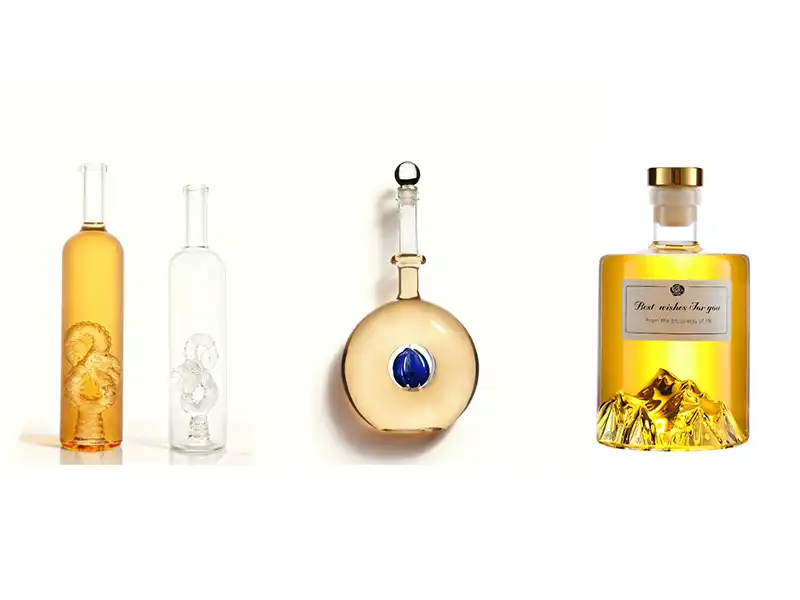
Personalization is more than just putting labels on things. Thermal transfer printing lets you print complex designs in many colors directly on glass surfaces. These patterns will not fade or crack even after being exposed to alcohol or cleaning cycles. Embossing makes brand marks that people can know just by touching them. This is especially useful in dark bars. For high-end gin and vodka brands, frosted finishes add a touch of understated luxury. Metallic coatings are used for limited editions and gifts. Adding custom glass lids instead of standard closures raises the perceived value, turning useful packages into collector items that people keep long after they've been used.
Design Shapes and Their Strategic Applications
The shape of the bottle directly affects what people buy and how efficiently they run their businesses. When it comes to mass retail distribution, where margins depend on how well processes work, cylindrical forms are perfect because they maximize pallet density and lower shipping costs. While asymmetrical or hexagonal designs are less efficient for shipping, they get a lot of attention in specialty liquor stores and duty-free shops, which is why they charge more.
Heavy-bottomed styles show that the drink is solid and will last a long time. This works especially well for aged spirits, where the weight of the bottle automatically shows how much the liquid is worth. Craft distillers who focus on plant materials and handcrafted production methods like apothecary-style vessels.
How to Choose the Right Supplier for Bulk Custom Liquor Bottles
Evaluating Production Capacity and Order Flexibility
Minimum order quantities tell you a lot about how big a business is and how much they care about their customers. When suppliers need between 10,000 and 20,000 units per order, they use continuous glass furnaces where changing the molds costs a lot. However, as the order number goes up, their prices per unit become very competitive. This standard works well for both new brands that want to sell in specific regions and well-known brands that want to release limited versions.
Manufacturers with smaller MOQs often use batch furnaces, which cost more per unit but give them a lot of freedom for testing the market. Over the past 30 years, Jiateng Glass Products Co., Ltd. has worked with well-known Chinese liquor names like Xifeng and Wuliangye, proving that it can handle both small-scale projects and yearly commitments of several million units.
Certifications and Compliance Credentials
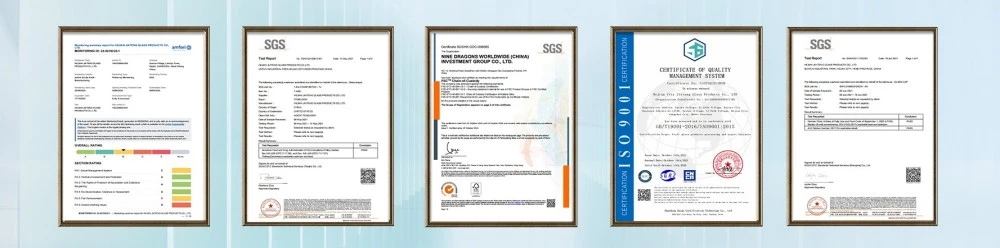
Different markets have very different rules about how to follow them, so seller certifications are necessary for international shipping. For real consideration, you need to have FDA registration for U.S. markets, LFGB certification for European Union compliance, and ISO 9001 quality management verification. In addition to certificates, you should check to see if sellers have recorded tracking systems that keep track of everything from raw materials to finished goods, including Custom Bottles of Liquor, as this is important for managing recalls and protecting yourself from liability.
Making glass without lead is now standard, but brands can keep their reputations safe in case of contamination problems by keeping clear records of their tests. Because they've spent time and money meeting different legal frameworks, suppliers that work with customers on more than one region usually have a wider range of certifications.
Geographic Considerations and Total Landed Cost
Because of economies of scale, Chinese companies like Jiateng Glass Products Co., Ltd. make most of the custom glass produced in the world. However, when decisions are made about what to buy, they have to compare the starting unit prices to the total landed costs. Specialized packaging, like palletizing with dividers and shrink-wrapping, is needed to ship glass containers abroad.
Depending on the location, this adds 15–25% to the FOB price. Asian providers have lead times of 45 to 90 days, which includes production and ocean freight. This means that accurate demand forecasts and inventory management are important. Domestic sellers can get things to you faster, but they charge 40–60% more, so they are better for urgent reorders than main supply lines. Finding the break-even numbers where speed benefits in the home country cancel out differences in cost helps to make the most of dual-sourcing strategies.
Ordering Process: From Inquiry to Delivery of Custom Bottles of Liquor in Bulk
Transforming Concepts Into Technical Specifications
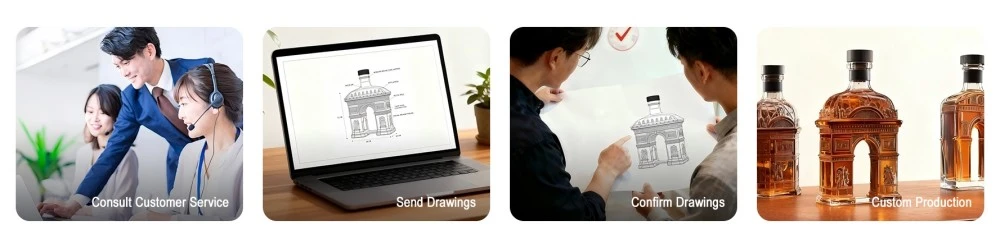
The first step in the procurement process is turning original ideas into specifications that can be manufactured. Jiateng Glass Products Co., Ltd. starts by getting rough sketches, samples of competing bottles, or full CAD files that show what you want your idea to do. Then, their engineering team comes up with three or four suggested changes that strike a balance between the desired look and the ability to manufacture the product. These changes take into account possible problems like mold release angles or structure weak spots before the investment in machinery.
Detailed technical sketches show the total height and diameter, liquid capacity with headspace estimates, and the weight distribution of the glass. The neck finish measurements are very important for making sure the closure works with the bottle. Many brands don't give this phase enough attention, but detailed recording up front keeps costly changes from happening during sampling.
Mold Development and Sampling Timelines
Fabricating a custom mold requires the most money up front and the longest lead time. Quality models are needed to make sure that millions of units are all produced the same way, so this step is very important for long-term success. Standard schedules allow 15 to 20 days for finishing the sample mold. During this time, precise cutting makes the empty space that shapes the molten glass.
Some providers can make 3D prototypes in as little as seven days, so you can see how they work before you commit to making metal tools. Sample batches usually have three to five units for full testing, such as making sure the closure fits properly, trying out label application, making sure the filling line works with the product, and drop testing the sample to model stress on the distribution system. At this point, approval stops mass production, so a full review is still needed, even though time is tight.
Production Execution and Quality Assurance
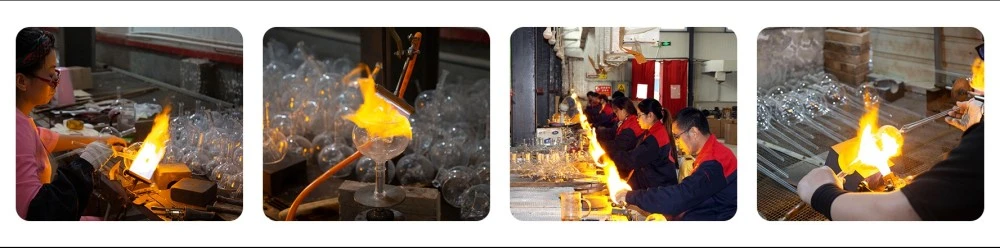
Schedules for mass production depend on how many orders there are and how many furnaces are available. Continuous production runs for orders of 20,000 or more units usually start 30 to 45 days after the sample is approved. Smaller batches, especially for Custom Bottles of Liquor, may have to wait for orders that match them so that the furnace can be set up. During production, methods for tracking should check the accuracy of dimensions, the uniformity of glass thickness, and the quality of the surface.
Manufacturers with a good reputation use statistical process control to take samples of units at regular times and compare them to tolerance standards for important parameters. Screen printing, hot stamping, and laser etching are all decoration methods that happen after annealing. Each one adds five to ten days to the delivery time. Before a package is authorized, the final review looks for visual flaws, broken packaging, and correct unit counts.
Logistics and Delivery Considerations
Glass packaging makes shipping difficult in its own way and needs special transportation management. The standard industry limit for damage during international transport is 3%. Damages that are worse than this usually mean that the item needs to be replaced or credited. Premium packaging, like dividers for each bottle, edges that are reinforced, and shrink-wrapped boxes, lowers the risk of breaking but also increases the amount that can be shipped.
Full containers of 750ml bottles weigh 18–22 tons, so the weight has to be carefully spread out so that the containers don't shift while they're being shipped across the ocean. It usually takes 25 to 30 days to get from Cangzhou to a big U.S. port, plus 7 to 10 days for interior freight and customs clearance. Keeping safety stock and building backup inventories can help keep production going even when supply lines get longer.
Comparing Custom Liquor Bottles vs Standard Bottles: What Fits Your Procurement Strategy?
Investment Analysis and Break-Even Volumes
Custom bottle development needs a big upfront investment, like mold costs of $10,000 to $25,000, design fees, and sample costs, which are not needed at all for normal bottles. This capital investment makes sense when expected numbers are high enough to cover costs over time or when brand differentiation leads to real gains in market share. To find the break-even point, you have to compare the total costs of making custom bottles (including the cost of tools and the cost of making each bottle) to the cost of making standard bottles over the expected lifetime amounts.
When brands plan to sell more than 100,000 units a year, they usually break even in 18 to 24 months. After that, the cost of each unit falls below the price of a standard bottle. Craft distilleries that don't sell their products very often might find that standard bottles are enough at first. As their sales grow, they can switch to unique designs.
Branding Impact and Consumer Perception
Standard bottles put products in their proper place within established category rules by using familiar shapes that quickly let you know what kind of product it is—for example, bordeaux bottles mean wine and boston rounds mean spirits. This understanding speeds up the decision-making process for shoppers in big stores who quickly scan the shelves. Custom designs don't follow the rules of their category, which gets people's attention and makes visual marks that stick out, which helps with premium pricing strategies.
Consumer studies consistently show that unique packaging raises the perceived value of an item by 20–35%, which directly leads to higher price points that people are willing to pay. The choice depends on your brand strategy: are you trying to build category volume through low prices and wide appeal, or are you trying to build brand value that allows you to place your product as a premium option?
Material Selection and Sustainability Considerations
Glass is still the most common material used to package high-end drinks because it doesn't let air or liquids through and is thought to be of higher quality. However, environmental concerns are becoming more and more important in purchasing choices, especially for Custom Bottles of Liquor. Borosilicate glass is easier to recycle than plastic alternatives because it keeps its shape through many recycling processes without losing any quality. Because borosilicate needs a higher melting point, it uses more energy to make than soda-lime glass.
This means that there is a trade-off between how well the material works and how much energy it takes to make it. Lightweighting programs cut the thickness of the glass and the weight of the bottle as a whole by 15 to 25 percent. This lowers shipping costs and the damage to the environment without affecting the bottle's structural stability. Brands that want to show they care about the environment should ask their sources for information on their carbon footprint and the amount of recycled content in their products, particularly when producing Custom Bottles of Liquor. They can then use this information to help them choose the right materials.
Innovative Custom Liquor Bottle Design Ideas and Trends for Bulk Orders
Minimalist Aesthetics Meet Functional Design
Modern packaging for alcohol tends to have clean lines and minimal decorations that let the color and clarity of the drink take center stage. This simple style makes production easier—fewer painting steps mean shorter lead times and lower costs—while still giving off an air of class that appeals to Gen Z and millennials. Instead of printed pictures, embossing adds a slight texture that keeps the design clean and helps people recognize the brand.
Transparent bottles with simple neck labels show off the quality of the product directly, which is a better way to build trust than making marketing claims. This trend is supported by Jiateng's ability to precisely emboss, which lets brands add names, batch numbers, or artistic patterns directly to glass surfaces while they are being formed.
Cultural Heritage and Storytelling Through Glass
Spirits brands are using bottle design more and more to tell origin stories and talk about how they produce their drinks. Adding regional architectural elements like famous locations, traditional patterns, and cultural symbols turns packaging into storytelling tools that set generic goods apart. This method is especially useful for Baijiu brands, which use tiny pagodas, mountain shapes, or calligraphic elements built into the shapes of their bottles to honor Chinese culture.
Craft distillers in the West also use building facades with historical figures, flowers from the area, or other designs that pay homage to the area's past. This way of sharing stories makes emotional links that go beyond the purpose of the packaging. It turns bottles into collectible items that people want to show off instead of throwing away. The technical challenge is turning complicated artistic ideas into glass shapes that can be produced. This requires brand designers and production engineers to work together closely.
Sustainable Innovation and Circular Economy Alignment
Environmental responsibility has evolved from marketing advantage to baseline expectation, which is pushing the packaging industry to come up with new materials. Consumers who care about the environment like closed-loop recycling programs where brands take back bottles to refill them or ensure recycling. These programs also lower ongoing material costs.
Designs for lightweight bottles that keep the structure strong while cutting the weight of the glass by 20–30% save money and help the environment. Some companies now make new bottles with 30 to 50 percent post-consumer glass content, which comes from recycled glass. Bio-based paints and water-based painting inks get rid of the need for harmful solvents in finishing processes. This protects workers' health and the environment.
Conclusion
When choosing where to buy premium Custom Bottles of Liquor in bulk, you need to carefully look at how they are made, what customization options they offer, and how much they cost all together. Jiateng Glass Products Co., Ltd. is among the well-known companies with thirty years of technical experience and flexible production systems that can work with both new craft brands and well-known international spirits companies. Their borosilicate glass bottles can be decorated with thermal transfer printing and come in a range of colors and capacities to meet the needs of procurement managers looking for reliable, scalable packaging solutions. Putting money into custom bottle development pays off in the long run through better brand recognition, higher prices, and long-term differentiation in competitive markets where packaging is becoming a bigger factor in buying decisions.
FAQ
What is the typical minimum order quantity for custom liquor bottles?
Because of the costs of running a continuous glass furnace, the minimum order quantity for fully custom mold development is usually between 10,000 and 20,000 units. For designs that use current base molds and custom decoration, smaller amounts of about 5,000 units may be possible, but the cost per unit will increase. Both the amortization of tooling investments and the efficiency of production are affected by volume commitments.
How long does the complete process take from initial inquiry to delivery?
The normal time frame is between 60 and 90 days. Design consultation and developing specifications take 5 to 10 days, making sample molds and glass samples takes 15 to 20 days, mass production takes 30 to 45 days, and based on the location, international shipping takes an extra 25 to 35 days. Domestic production or air freight can shorten lead times, but they will cost more.
Are eco-friendly options available for large-scale bottle production?
More and more, manufacturers are offering choices with recycled glass content, lightweight forms that use less material, and lead-free formulas as standard. Bio-coatings and water-based decoration paints get rid of solvent fumes. Asking for specific sustainable documents and carbon footprint data helps make sure that environmental qualifications are properly evaluated.
What customization options work best for brand differentiation?
The best ways to tell them apart are through embossing and unique geometric shapes, which are hard to copy just by changing the labels. When someone owns a proprietary mold, rivals can't use the same bottles. Color spray painting, frosted finishes, and metallic coatings can help make things a little different at a lower cost, and they can still be used in different seasons.
Partner with Jiateng for Your Custom Liquor Bottle Solution
Jiateng Glass Products Co., Ltd. is ready to be your reliable source for Custom Bottles of Liquor. With 30 years of experience making high-quality products, they can help you with your packaging problems. From the first sketches of an idea to the final delivery, our engineering team is there to help you make sure that your vision turns into market-ready bottles that improve brand positioning. With a proven capacity of more than three million units per year for well-known clients like Wuliangye and Xifeng, we keep the quality standards and delivery dependability that global drinks brands expect.
We have basic 350ml, 500ml, and 750ml borosilicate glass bottles that can hold whisky, vodka, gin, brandy, wine, and Baijiu. We also offer full OEM/ODM customization, which includes thermal transfer printing, color spray painting, embossing, and decorative finishes. You can talk to our international trade team at lhd513@jtblzp.com or visit jtglass.com to talk about your specific needs and get full quotes that are based on your desired volume and level of customization. Contact
References
1. Johnson, M. & Williams, P. (2022). Strategic Packaging Design in the Global Spirits Industry. Beverage Packaging Institute Press.
2. Chen, L. (2021). Glass Manufacturing Technologies for Premium Beverage Containers. Industrial Materials Quarterly, 47(3), 112-129.
3. Rodriguez, A. & Thompson, K. (2023). Supply Chain Optimization for International Glass Packaging Procurement. Journal of Beverage Industry Logistics, 15(2), 34-51.
4. Mitchell, S. (2022). Sustainable Packaging Solutions in Alcoholic Beverage Markets. Environmental Packaging Review, 29(4), 78-95.
5. Zhang, W. & Anderson, R. (2021). Consumer Perception and Premium Packaging: A Spirits Market Analysis. Marketing Research International, 38(1), 145-163.
6. Davies, H. (2023). Custom Mold Development and Production Economics in Glass Container Manufacturing. Glass Technology Advances, 12(2), 203-218.