



Why are alcohol bottles so fancy?
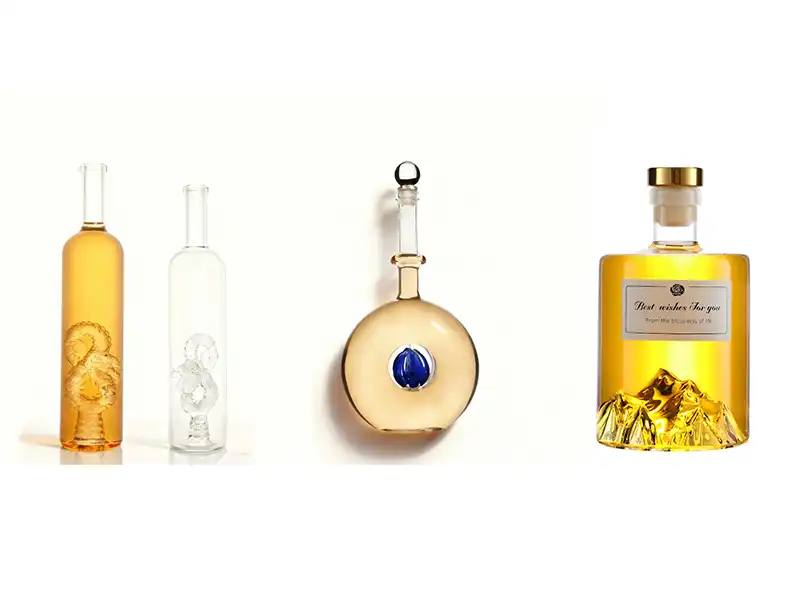
Have you ever been in a booze store and been mesmerized by a bottle that looked like it was calling out to you? The art that goes into booze packaging goes far beyond just keeping the drink inside. Branding, craftsmanship, and buyer psychology all come together in a smart way in Fancy Looking Alcohol Bottles. These high-end glass containers, made from borosilicate glass and holding up to 500ml, do a lot of things: they protect the liquid, show off the brand's values, justify the higher price, and make unboxing memorable, turning ordinary purchases into moments of excitement and joy.
The Evolution and Purpose of Fancy Alcohol Bottles
The history of alcohol bottle design shows how people's ideas about wealth and joy have changed over time. In the 1600s, European glassmakers were the first to use decorative methods on practical objects, turning them into status symbols. Rich customers ordered custom decanters with family crests on them, starting a practice where good packing meant good products.
Historical Foundations of Decorative Bottle Design
Early spirit makers knew that how something looked directly affected people's choices to buy it. In the 1800s, cognac houses in France's Champagne area started using thick-bottomed bottles with raised designs. This gave customers a tactile experience that made them feel like they were drinking fine handiwork before they even tasted the liquid. This practice set standards that are still used today in the market for expensive spirits, where bottle weight and the amount of detail on the decoration show quality levels.
Modern makers, such as Jiateng Glass Products, build on these historical roots while also using new technologies for production. Since it opened in 1992 in Cangzhou, Hebei, our building has spent 30 years improving methods that combine traditional style with high-tech efficiency. Working with well-known brands like Xifeng Wine and Wuliangye shows that good bottle design helps brands stand out in crowded markets.
Psychological and Marketing Drivers
Packaging studies constantly show that people decide about a product's quality in the first three seconds they see it. This "thin-slicing" effect is used by premium bottle designs in a number of ways. Heavy glass distribution gives something a substantial feel in the hand, which unconsciously suggests that it contains expensive items. Brands can use thermal transfer printing and custom color spray painting to show complex designs and stories that connect with their target audience.
When brand managers buy custom molds and unique forms, they meet three important business goals. When your whisky or baijiu stands out from dozens of other products on store shelves, you can differentiate yourself in the market. Proprietary stamping adds anti-counterfeiting features that protect both the brand's image and the safety of its customers. Pricing tactics that are based on true production costs and brand history instead of commodity-level competition are possible with perceived value justification.
Key Types and Designs of Fancy Alcohol Bottles
There are a huge number of different bottle designs used in the alcohol packaging business. Each style meets different branding and functional needs. Knowing about these differences helps procurement workers choose styles that fit with how the product is positioned and what the target market wants.
Shape Categories and Their Applications
Classic round bottles are still very popular in the whisky, brandy, and vodka markets. Their uniformity makes production and shipping more efficient and gives you a lot of space to put labels on them. Because they make the best use of shelf space, square and rectangular shapes are popular in bars and restaurants where storage density is important. These geometric shapes also send a message of progress and accuracy, which are qualities that craft liquor brands looking to break into established markets value.
Artistic or sculptural Fancy Looking Alcohol Bottles push the limits of what is possible, turning packing into valuable items. We've made custom designs that include famous mountain shapes, architecture sites, and cultural symbols that are built right into the glass. In a memorable project, a small cityscape was put inside a 500ml borosilicate glass bottle. This made the bottle a talking piece and turned an anniversary baijiu release into a cultural event. For limited-edition launches, these big designs need specialized mold engineering and close production tracking, but the effect on the market is worth the cost.
Material Innovations and Finishing Techniques
Because it is so clear and doesn't get hot, borosilicate glass has become a popular choice for high-end bottles. Borosilicate glass, on the other hand, has boron trioxide added to it, which stops it from expanding when the temperature changes and makes it last longer. This quality is very important for spirits that are filled with heat or stored in the cold, which is common in foreign supply lines.
When you treat the surface, you can greatly change how it looks and how it works. Frosting methods make beautiful matte finishes for amber and golden brandies that keep the colors visible while reducing the amount of light that bounces off of them. Embossed patterns add physical dimensions that make it easier to recognize a brand through touch. This is especially helpful in dark bars where it's hard to see. Clear bottles show off the color and clarity of the liquid inside, which makes them perfect for high-end vodkas and old spirits where looks are important. Decorating styles are always changing to keep up with fashion and environmental worries. Full-color images can be printed with thermal transfer printing, while electroplating and laser etching make features that will last even after being handled and worn down by business use.
How Fancy Alcohol Bottles Are Made: From Concept to Production
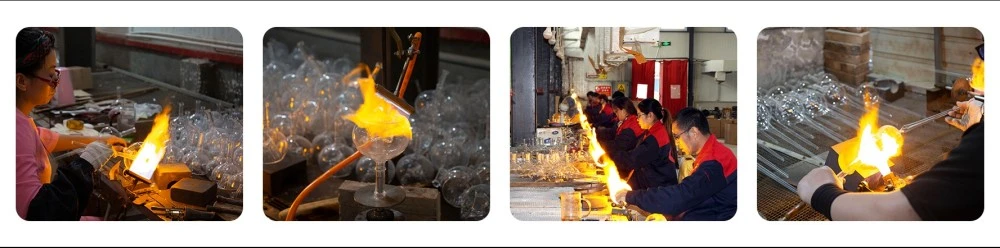
To make high-quality glass bottles, the design, engineering, and quality testing fields must work together very closely. After 30 years of production, we've honed our processes so that they always produce the same high-quality results, whether we're launching a 10,000-unit project or meeting ongoing 500,000-bottle supply deals.
Design Development and Prototyping Phase
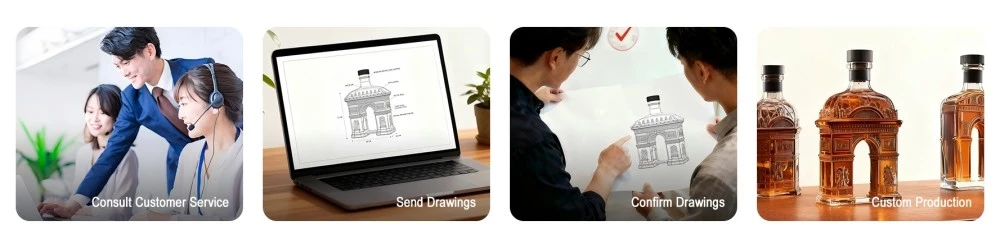
Gathering a lot of ideas is the first step to making unique bottle projects that go well. We work with brand managers, product designers, and people who make buying decisions to write down shape preferences, capacity needs, neck finish specs, and ideas for decoration. Rough sketches from creative teams are looked at by technical experts to make sure they can be made without sacrificing the artistic vision. Our engineering department makes official drawings with important measurements like height, diameter, wall thickness distribution, and glass weight estimates that affect shipping costs.
The prototyping stage is changed by 3D printing technology, which makes it possible to make real models before expensive molds are made. These models help clients check for ergonomics, visual measurements, and cap compatibility, which cuts down on review processes and speeds up time-to-market. A recent craft beer client changed their original hexagonal design after 3D testing showed problems with handling during six-pack assembly. This saved them thousands of dollars in mold repair costs.
Mold Engineering and Production Implementation
Molds that are of good quality are the basis for making regular bottles. We have full tooling powers that include neck molds, body molds, base molds, and detail inserts for logos and material patterns. Mold materials and cooling channel designs have a direct effect on production speeds and surface quality. To make these decisions, our expert teams need to know a lot about metals, which they have learned over many years of trial and error.
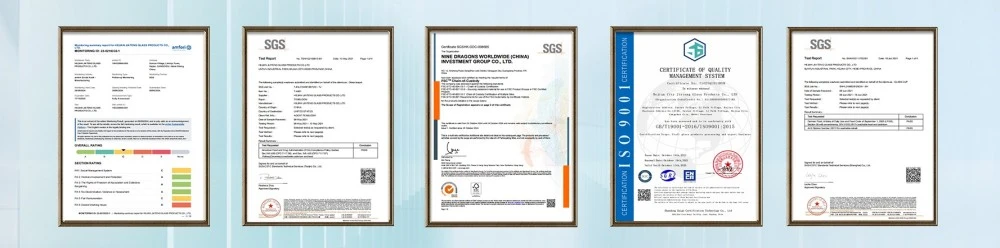
When molds are finished, they need to be carefully calibrated before they can be put on production lines. To get the optical clarity needed for high-end uses, borosilicate glass recipes need precise temperature control during the melting and shaping steps. During production runs, our quality tracking systems keep an eye on annealing stress levels, cosmetic standards, and limits for size and shape. Polariscope checks find internal strain that could cause the bottle to break on its own, and vertical load testing makes sure that the bottles can handle capping forces of more than 150 kilograms-force when the cork is put in. The making method ends with decoration steps like silk-screen printing, hot pressing, and thermal transfer printing.
Comparing Fancy Alcohol Bottles with Regular Bottles: Procurement Insights
When balancing packaging costs against brand image goals, procurement workers have to make important choices. Knowing how the value propositions of standard and premium bottles are different lets you make smart investments that boost marketing effect and improve business efficiency.
Cost-Benefit Analysis for Different Market Segments
Standard stock bottles are very important in markets where volume is important and price sensitivity rules the buying process. These designs use well-known molds that are shared among several customers. This lowers the cost per unit and lets smaller orders of about 1,500 pieces be placed. They work well for bar supply contracts and entry-level product lines where simple packing fits with a focus on value.
Premium custom Fancy Looking Alcohol Bottles cost more per unit, but they make a lot of money because they build brand value and give you more selling power. Market study shows that people think drinks in heavy, ornate bottles are 30–40% more expensive than the same liquids in regular containers. This difference in how people see things provides margin possibilities that often go beyond the extra cost of packaging. Unique bottles are great for luxury gifts because the receivers will associate the quality of the presentation with the thoughtfulness of the giver.
Supplier Selection and Negotiation Strategies
To find trustworthy makers, you need to look at their technical skills, quality control methods, and service infrastructure. Facilities should show they know how to create molds, have high-tech decorating tools, and strong quality control methods like polariscope strain testing and measurement verification. Site approvals from international safety standards groups give you peace of mind about the regularity of your production and your compliance with the law.
When buyers make large promises and set up long-term partnership models, they have more negotiating power. Our price models reward customers who plan to buy more than 3 million bottles a year by giving them specialized account management and first choice for production scheduling. As part of your due research, you should look into how to protect intellectual property for custom mold designs. Reputable providers promise in writing that private forms will only be used by hiring clients. We have strict mold security rules and agreements to protect the economic benefits that made custom tooling investments worth it.
Practical Guide to Using, Collecting, and Maintaining Fancy Alcohol Bottles
Premium bottles do more than just hold drink. They're also useful for marketing, collecting, and decorating, which keeps people interested in the brand long after they've bought something. Knowing the right way to handle and show things makes these extra value streams more valuable.
Storage and Display Best Practices
To show off the beauty of bottles while keeping the purity of the product, commercial display areas need to be carefully planned out. Vertical positioning keeps the cork from breaking down and the sediment from moving around in old spirits. Controlled lighting keeps UV rays from hurting photosensitive liquids. Premium bottles should be displayed on store shelves so that they are at eye level and in the 4-6 foot vertical zone where customers naturally look. Designs that stand out should be put against gray backgrounds that draw attention to artistic details.
Temperature stability is important, especially for bottles with metal designs or parts made of more than one material. Differential expansion caused by thermal cycling can weaken the bonds between hot-stamped labels or crack the solder joints that connect Zamac stoppers to glass necks. These risks are eliminated by climate-controlled storage between 15 and 20°C, which also keeps the quality of the liquid during long periods of time in stock.
Cleaning and Preservation Techniques
To keep the surface from getting damaged during normal handling, it needs to be cleaned in a certain way. Areas with raised edges collect dust that needs to be removed with a soft brush before it can be cleaned with water to avoid scratching. Petroleum-based chemicals can damage frosted finishes, so use light soap solutions and a microfiber cloth instead. Electroplated features keep their shine when they are cleaned with distilled water and dried right away to avoid mineral buildup.
Transit security is very important when Fancy Looking Alcohol Bottles are used for advertising and need to be moved around. Custom foam inserts that are formed to the shape of each bottle keep them from getting damaged during shipping, and plastic dividers keep glass from touching glass. Our packing team creates protective solutions that can be shipped by foreign air freight and ocean containers so your branded items arrive spotless for tasting events.
Leveraging Collectibility for Brand Storytelling
Collectors trade bottles based on design rarity and historical importance in secondary markets made possible by limited-edition releases and anniversary commemoratives. Brands can make this trend bigger by putting out limited editions with authentication certificates. This turns packaging into keepsakes that can be bought for a lot of money. The results of auctions for retired designs support higher prices for new releases and build excitement for future limited runs.
Collectors can show off their new items and share brand stories that are etched in bottle patterns on social media sites. One vodka client used QR codes in their raised base designs to link to videos about the history of distilling and where the ingredients came from. This combination turned passive packaging into engaging brand experiences that made thousands of social impressions, strengthened emotional ties, and led to more sales.
Conclusion
Premium alcohol packaging is a smart investment that changes how customers see a product, helps set prices, and leaves a strong image of the brand that lasts long after the sale. From simple cases to Fancy Looking Alcohol Bottles, the process includes complex engineering, working together with artists, and market research that matches the packaging's features with the brand's values and the people it wants to reach. Choosing the right bottle design is very important for business success, whether you're introducing craft spirits into competitive markets, moving well-known brands for higher-end markets, or making limited versions that people will want to collect. Purchasing managers who understand these factors—from the properties of borosilicate glass to the choice of decoration methods—can help their companies use packaging to its fullest as a marketing tool, a sign of quality, and a source of income in the global drinks industry.
FAQ
What makes fancy bottles different from regular bottles?
Premium bottles stand out because of the high quality of their materials, the complexity of their structures, and the skill with which they are decorated. Borosilicate glass formulations are clearer than regular soda-lime formulations. Heavy base designs and engraved features make the glass feel luxurious and show how much it's worth. Custom molds make it possible to make unique forms that can't be made again without special tools, protecting against cheating and making the product stand out on store shelves.
Can we customize bottles for small production runs?
Customization choices get more flexible as the number of orders goes up, but different approaches have different cost impacts. For tooling expenses to be worth it, full custom molds usually need at least 20,000 to 30,000 units. Customization options for decoration include thermal transfer printing, laser etching, and label application. Smaller runs begin at around 10,000 pieces, which allows for limited versions and market testing without having to pay huge amounts of money up front.
How long does custom bottle development take?
Expected timelines rely on how complicated the plan is and how quickly it needs to be made. Standard customization projects that add decorations to current bottle shapes usually take 8 to 12 weeks from the time the idea is approved until the sample is delivered. Full custom mold development takes 14 to 18 weeks and includes finalizing the design, making the mold, testing it in production, and sending out samples. Getting involved with production partners early prevents quality from being compromised by deadlines.
Are eco-friendly options available for premium bottles?
Sustainability efforts are having a bigger impact on the packing industry's choice of materials. Glass is better for the earth than single-use plastics because it can be recycled over and over again without losing any quality. Closed-loop cullet recycling systems at our plant use production trash to make new batches, cutting down on the need for new materials. Traditional printing methods produce a lot of chemical waste, but decoration technologies like laser cutting don't, appealing to customers who care about the environment.
What quality standards apply to fancy bottles?
Premium bottles go through strict checking procedures that go above and beyond what is required of regular drinking containers. Polariscope strain testing finds internal stress that could lead to breaking. Dimensional verification makes sure that the neck finish limits keep the closing fitting securely, which stops leaks during shipping and storage. Cosmetic checks set tight limits on surface flaws and bubbles. Thermal shock resistance testing ensures Fancy Looking Alcohol Bottles can be used for hot filling and processing, protecting brand names and customer safety.
How do we protect our custom designs from copying?
When engaging in proprietary mold creation, intellectual property protection should be a standard part of supplier deals. Reputable makers offer written exclusivity promises that stop competing clients from using the mold for their own purposes. Ownership terms should make it clear who is responsible for managing assets. Physical security measures like limited access to molds and tracking goods by serial number stop production runs that aren't supposed to happen. Our 30-year reputation depends on protecting our clients' new ideas and competitive advantages.
Partner with Jiateng for Your Premium Bottle Manufacturing Needs
To make well-known drinks brands, you need package partners who are both technically excellent and willing to work with you on creative projects. Jiateng Glass Products has been working in the alcohol packaging industry for 30 years and has managed projects ranging from limited runs of 10,000 pieces to yearly supply deals for 3 million bottles. Our full-service model includes design advice, mold engineering, decoration execution, and transportation management, ensuring consistent quality at every stage of production.
As a reliable maker of Fancy Looking Alcohol Bottles, we've formed relationships with well-known names like Xifeng Wine and Wuliangye. This shows that we can meet the high standards needed by competitive premium markets. With 15 years of experience exporting, our international trade team makes it easy for people from different time zones to communicate, while the technical depth of our engineering department makes complex custom solutions possible. Whether you are launching a new craft spirit or repositioning an existing label, our customization capabilities—from 500ml borosilicate glass bottles to sculptural designs—will help you build brand equity and achieve commercial success. Contact our team at lhd513@jtblzp.com to discuss your specific requirements and discover how Jiateng's manufacturing excellence can support your market objectives.
References
1. Robertson, Gordon L. Food Packaging: Principles and Practice. CRC Press, 2016.
2. Stewart, Bill. Glass Engineering Handbook. McGraw-Hill Professional, 2019.
3. Ampuero, Olga and Natalia Vila. "Consumer Perceptions of Product Packaging." Journal of Consumer Marketing, vol. 23, no. 2, 2006, pp. 100-112.
4. Klimchuk, Marianne Rosner and Sandra A. Krasovec. Packaging Design: Successful Product Branding from Concept to Shelf. John Wiley & Sons, 2013.
5. Simmonds, Geoff and Louise Spence. "Managing Premium Glass Container Production: Quality Systems in the Spirits Industry." Packaging Technology and Science, vol. 31, no. 8, 2018, pp. 523-541.
6. Chen, Ming and Robert Liu. "The Evolution of Baijiu Packaging in Chinese Luxury Markets." Asian Journal of Business Research, vol. 12, no. 1, 2022, pp. 45-67.